Skip to content


A Manufacturer’s Practical Guide for International Bearing Importers and Procurement Teams
AI Summary
Customs delays in bearing imports are rarely caused by one isolated mistake. They usually result from inconsistencies between the product, commercial invoice, packing list, HS classification, declared value, country of origin, shipping documents and local import requirements.
From a bearing manufacturer’s perspective, the most effective way to prevent delays is to treat customs preparation as part of the procurement process—not as paperwork to be completed after production.
Before shipment, the importer and supplier should jointly confirm:
- The exact bearing description and model
- The destination-country tariff classification
- The declared transaction value
- Country-of-origin information and product marking
- Importer registration and licensing requirements
- Commercial invoice and packing-list consistency
- Required material, inspection and compliance documents
- Packaging materials and wooden-case requirements
- The responsibilities assigned under the agreed Incoterm
- A pre-shipment document review by the customs broker
The objective is not simply to prepare more documents. It is to ensure that every document tells customs authorities the same, accurate and verifiable story about the shipment.
Featured Summary
To avoid customs delays when importing bearings, buyers should confirm the HS code, product description, declared value, country of origin, importer registration, required certificates and Incoterm before the goods are shipped.
The commercial invoice, packing list, transport document, purchase order and customs declaration must use consistent information. Generic descriptions such as “machine parts,” inaccurate values, conflicting quantities or unsupported tariff classifications increase the risk of customs queries and inspections.
For large, customized or high-value bearings, importers should send draft documents to their customs broker before shipment and obtain an advance tariff ruling when classification remains uncertain.
Introduction
A bearing can pass dimensional inspection, material testing and performance verification—and still fail to reach the buyer on time.
The problem may have nothing to do with the bearing itself.
It may be caused by:
- An incomplete commercial invoice
- An incorrect HS code
- A vague cargo description
- A mismatch between the invoice and packing list
- Missing country-of-origin marking
- An importer that is not properly registered
- A wooden case that does not satisfy destination-country requirements
- A customs value that cannot be supported
- A disagreement over who is responsible for import clearance
When this happens, the cargo may be held while customs authorities, brokers, carriers, importers and suppliers exchange documents and explanations.
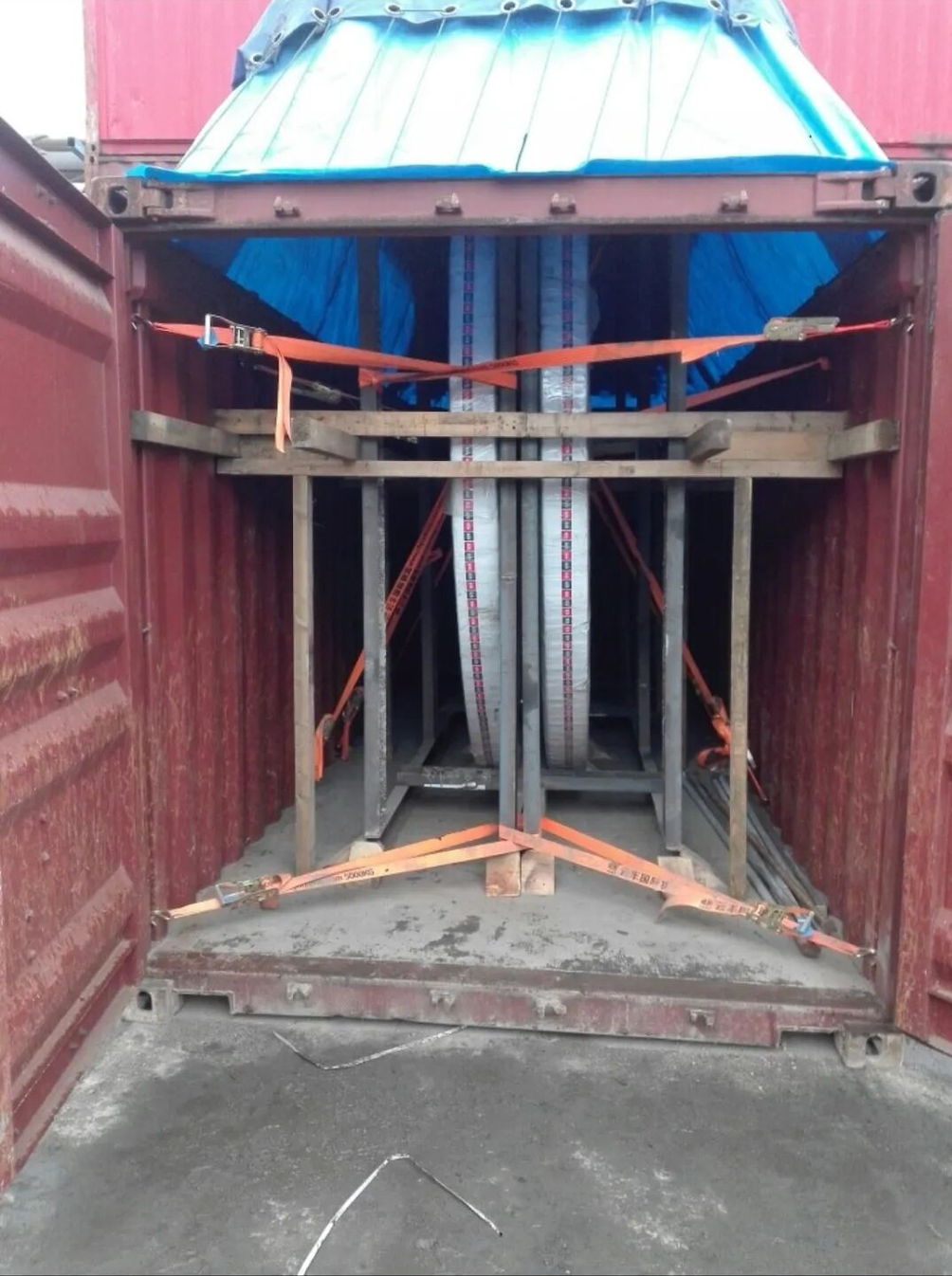
For a small air shipment, the result may be a few days of delay. For a large slewing bearing shipped by sea, the consequences may include port storage, demurrage, customs inspection charges, crane or handling costs, missed installation schedules and production downtime.
As a bearing manufacturer serving international customers, I see customs preparation as part of order engineering. The same discipline used to confirm dimensions, material, clearance and lubrication should also be applied to classification, documentation, valuation, marking and packaging.
This guide explains how bearing importers and international procurement teams can reduce customs risk before the shipment leaves the factory.
Customs rules vary by destination, product use and transaction structure. Buyers should confirm final requirements with their licensed customs broker, freight forwarder or local customs authority.
Table of Contents
- Why bearing shipments are delayed at customs
- Confirm the exact product before discussing customs
- Determine the correct HS classification
- Use a precise customs description
- Declare the correct customs value
- Confirm the country of origin
- Make every shipping document consistent
- Prepare destination-specific import information
- Confirm certificates and technical documents
- Control packaging and marking
- Choose the correct Incoterm
- Involve the customs broker before shipment
- Manage customized and high-value bearings differently
- Build a pre-shipment customs control process
- What to do when a bearing shipment is already delayed
- Common customs mistakes
- Pre-shipment checklist
- Frequently asked questions
- Conclusion
1. Why Bearing Shipments Are Delayed at Customs
Customs delays usually occur when authorities cannot quickly answer four basic questions:
- What exactly are the goods?
- How should they be classified?
- What are they worth?
- Where do they originate?
For most bearing shipments, these questions appear simple. In practice, they can become complicated because “bearing” is not a complete customs description.
A shipment may contain:
- Deep groove ball bearings
- Angular contact ball bearings
- Cylindrical roller bearings
- Spherical roller bearings
- Tapered roller bearings
- Needle roller bearings
- Thrust bearings
- Slewing bearings
- Bearing housings
- Mounted bearing units
- Inner rings
- Outer rings
- Rollers
- Cages
- Seals
- Gear rings
- Mixed bearing assemblies
These products may fall under different subheadings, tariff rates or trade-remedy measures depending on their design, components, origin and destination country.
The Harmonized System provides a six-digit international classification structure, but individual countries commonly extend that structure with additional digits for their own tariff and statistical purposes. The WCO states that the HS contains more than 5,000 commodity groups and is used by over 200 countries and economies. (WCOOMD)
This means that a six-digit heading used by the supplier may not be sufficient for the importer’s final customs declaration.
The manufacturer’s view
The factory understands what was produced.
The importer understands where it will be used.
The customs broker understands the destination-country declaration system.
Customs clearance is most reliable when these three parties exchange information before shipment—not after the cargo arrives.
2. Confirm the Exact Product Before Discussing Customs
The first customs-control step is not choosing an HS code.
It is defining the product accurately.
For each bearing model, the importer and manufacturer should confirm:
- Bearing type
- Model number
- Inside diameter
- Outside diameter
- Width or height
- Number of rows
- Ball or roller construction
- Radial, thrust or combined-load function
- Open, shielded or sealed design
- Material
- Presence of housing
- Presence of gears
- Internal or external gear configuration
- Whether it is a complete bearing or an individual part
- Intended application, when relevant to classification or regulation
Why this matters
Consider the difference between the following descriptions:
Bearing
Roller bearing
Spherical roller bearing, model 22220, 100 × 180 × 46 mm
The third description gives customs and the broker enough information to begin a meaningful classification review.
For a large slewing bearing, the description may need to identify:
- Four-point contact ball or crossed roller design
- Internal gear, external gear or gearless structure
- Complete bearing or separate ring
- Material and dimensions
- Industrial application
A gear ring, a bearing ring and a complete geared slewing bearing may appear visually similar to a non-specialist, but they are not necessarily treated identically for customs purposes.
Recommended manufacturer practice
Before preparing the invoice, we should ask:
Is the quoted item a complete bearing, a bearing component, a housing, a gear ring or a combined assembly?
That answer should be confirmed during quotation—not discovered during customs clearance.
3. Determine the Correct HS Classification
Do not choose an HS code based only on a previous shipment
One of the most common mistakes is copying a code from:
- An old invoice
- Another supplier
- Another destination country
- An online marketplace
- A similar-looking product
- A freight forwarder’s preliminary suggestion
That code may be outdated, incomplete or unsuitable for the specific product.
Why bearing classification requires attention
The HS framework includes headings for ball and roller bearings, their parts and certain related assemblies. However, classification may depend on whether the shipment contains:
- A complete bearing
- A bearing housing with an incorporated bearing
- A housing without a bearing
- A bearing part
- A gear or gear ring
- A complete machine component incorporating a bearing
- A mixed assembly with a principal function beyond the bearing itself
The international HS structure uses six digits, but national tariff schedules may add two, four or more digits. Therefore, a Chinese export declaration code, a U.S. HTS classification and an EU CN/TARIC classification may not be identical in length or legal effect.
Who should make the final decision?
As a manufacturer, we can provide:
- Product drawings
- Catalog descriptions
- Photographs
- Material information
- Construction details
- Component breakdowns
- Application information
- Previously used classifications
However, the importer remains responsible for confirming the correct destination-country classification with its broker or customs authority.
The WCO itself does not provide private parties with individual classification decisions and advises traders to contact the relevant national customs administration. (WCOOMD)
Use advance rulings for uncertain classifications
For recurring, high-value or technically unusual bearing imports, an advance ruling can be more valuable than repeatedly debating the code shipment by shipment.
Advance-ruling programs allow customs authorities to decide matters such as classification or origin before importation, improving predictability for the trader. (WCOOMD)
An advance ruling should be considered when importing:
- Customized slewing bearings
- Combined bearing-and-gear assemblies
- Large segmented rings
- Bearing housings with integrated components
- Specialized aerospace or industrial bearings
- Mixed repair kits
- Products subject to additional duties or trade remedies
- High-volume repeat orders
Manufacturer’s recommendation
Do not ask the supplier only:
What HS code do you use?
Ask instead:
Please provide the complete technical information our customs broker needs to confirm the destination-country tariff classification.
That is a much safer question.
In another article, I explain in detail how bearing importers can look up accurate HS codes.
4. Use a Precise Customs Description
A technically correct bearing can still be delayed if the invoice description is too vague.
Weak descriptions
Avoid descriptions such as:
- Bearing
- Machine part
- Metal part
- Spare part
- Industrial component
- Steel ring
- Accessories
- Samples
These descriptions do not allow customs authorities to identify the goods confidently.
CBP, for example, states that cargo descriptions should be clear, concise, written in plain language and detailed enough to identify the merchandise and its characteristics. (海关与边境保护局)
Better descriptions
Use descriptions such as:
Deep groove ball bearing, model 6205-2RS, chrome steel, 25 × 52 × 15 mm
Spherical roller bearing, model 22220 CA/W33, brass cage, 100 × 180 × 46 mm
Crossed roller slewing bearing with internal gear, drawing No. VK-CRB-001, 42CrMo steel, for industrial rotary table
Stainless steel deep groove ball bearing, model S6204-2RS, food-processing machinery application
Match commercial and technical language
A useful customs description should combine:
- Standard product name
- Model or drawing number
- Essential construction
- Material when relevant
- Dimensions where useful
- Intended industrial use where useful
Do not overload the invoice with an entire engineering specification, but do not reduce a complex product to “machine part.”
Keep descriptions consistent
The description should remain aligned across:
- Purchase order
- Pro forma invoice
- Commercial invoice
- Packing list
- Bill of lading or air waybill
- Certificate of origin
- Customs declaration
- Inspection certificate
- Product labels
Minor wording differences are not always a problem. Contradictory product identities are.
5. Declare the Correct Customs Value
Customs valuation is one of the most sensitive areas of international trade.
Delays may occur when the declared value appears:
- Unusually low
- Inconsistent with the payment record
- Inconsistent with previous imports
- Incomplete
- Unsupported by the invoice
- Artificially divided
- Reduced because the goods are samples
- Excluding chargeable tooling, royalties or assists
- Different from the purchase contract
A commercial invoice is not an arbitrary document
The declared amount should reflect the transaction and follow the valuation rules of the destination country.
For U.S. imports, CBP explains that the commercial-invoice value should normally be the price paid by the U.S. buyer for the goods—not their future resale price. (海关与边境保护局帮助中心)
Other jurisdictions may apply their own valuation rules, including treatment of freight, insurance, tooling, assists, royalties, commissions or related-party transactions.
Common bearing-industry valuation risks
1. Declaring a nominal sample value
A bearing may be supplied free of charge for testing, but that does not automatically mean its customs value is zero.
Customs may still require a fair and supportable value.
2. Separating tooling without review
For customized bearings, buyers may pay for:
- Molds
- Fixtures
- Gauges
- Patterns
- Drawings
- Engineering
- Testing devices
Depending on the transaction and local rules, some of these costs may affect customs value.
3. Excluding special testing charges
UT, magnetic-particle inspection, third-party testing, material verification or special documentation may be charged separately. The importer should ask its broker whether those charges form part of the customs value.
4. Inconsistent freight treatment
Whether freight and insurance are included in the declared customs value depends on the country’s valuation rules and invoice structure.
5. Using a lower invoice than the actual payment
This creates serious compliance risk and can result in reassessment, penalties, seizure or retrospective audit.
Manufacturer’s principle
We should never solve a tariff problem by manipulating the invoice value.
The correct way to reduce landed cost is through:
- Correct classification
- Legitimate preferential origin
- Efficient logistics
- Consolidated shipments
- Better purchasing forecasts
- Duty-relief programs
- Temporary import procedures
- Proper customs planning
Not undervaluation.
6. Confirm the Country of Origin
Country of origin is not always the same as:
- Country of shipment
- Seller’s country
- Brand owner’s country
- Port of loading
- Country where the invoice was issued
Origin rules determine the economic nationality of goods and may affect duties, quotas, trade remedies, preferential treatment and statistical reporting. (WCOOMD)
Questions importers should answer
- Where was the bearing substantially manufactured?
- Where were the rings produced?
- Where did heat treatment take place?
- Where were grinding and assembly completed?
- Is the product merely repacked in another country?
- Does a preferential trade agreement apply?
- Is a specific certificate or origin statement required?
- Does the product need physical country-of-origin marking?
Country-of-origin marking
Some countries require imported goods or their containers to carry origin marking in a prescribed form.
For example, CBP states that foreign-origin goods entering the United States generally must be marked legibly with the English name of the country of origin unless an exception applies. (海关与边境保护局)
For bearing shipments, origin marking may appear on:
- The bearing
- Inner packaging
- Individual boxes
- Export cartons
- Wooden cases
- Metal nameplates
- Labels
The correct approach depends on the product, packaging, destination and applicable exceptions.
Preferential origin is not automatic
A product may be manufactured in a country that has a free-trade agreement with the importing country, but preferential duty treatment usually requires the product to satisfy the agreement’s specific origin rule and documentary conditions.
A certificate saying “Made in China,” “Made in Vietnam” or another origin does not by itself guarantee preferential duty treatment.
Manufacturer’s recommendation
Confirm origin requirements before we print boxes, engrave markings or prepare the certificate of origin.
Changing origin labels after packaging is complete creates avoidable cost and delay.
7. Make Every Shipping Document Consistent
Customs authorities do not review one document in isolation.
They compare documents.
A shipment becomes suspicious when the documents describe different transactions.
Essential documents commonly include
- Commercial invoice
- Packing list
- Bill of lading or air waybill
- Purchase order
- Sales contract
- Certificate of origin
- Import declaration
- Export declaration
- Insurance certificate, when applicable
- Inspection or material certificates
- Import permit, when applicable
Information that must be aligned
Check the following across all documents:
| Data field | What must be consistent |
|---|---|
| Exporter | Legal name and address |
| Importer | Legal name and registration details |
| Consignee | Correct delivery or customs entity |
| Product | Accurate bearing description |
| Model | Same model or drawing number |
| Quantity | Same number of pieces, sets or units |
| Value | Same currency and transaction basis |
| Weight | Logical net and gross weights |
| Packages | Same package count and type |
| Origin | Same country-of-origin statement |
| HS code | Consistent with broker-approved classification |
| Incoterm | Correct rule, named place and version |
| Transport | Correct vessel, flight, port or airport details |
Typical bearing-document mismatches
- Invoice says 10 pieces; packing list says 12 pieces
- Invoice uses “bearing”; airway bill uses “steel accessories”
- Net weight exceeds gross weight
- Commercial invoice lists one model while boxes show another
- Country of origin is missing on the invoice
- Certificate of origin uses a different exporter name
- Wooden-case dimensions do not match the booking
- Currency differs between the pro forma and commercial invoice
- Incoterm is stated without a named place
- Packing list identifies “one case,” but the shipment has two cases
These errors often begin as clerical mistakes, but customs cannot assume that.
A simple control method
Before shipment, create a document master sheet containing the approved:
- Buyer name
- Importer name
- Consignee
- Product description
- HS code
- Origin
- Quantity
- Unit price
- Total value
- Currency
- Package count
- Net weight
- Gross weight
- Incoterm
- Port or airport
Every shipping document should be checked against that master sheet.
8. Prepare Destination-Specific Import Information
The supplier cannot prepare a compliant shipment without information from the importer.
Importer registration
Depending on the destination, the buyer may need:
- Importer of record registration
- Tax number
- Customs identification number
- Import license
- Product-specific permit
- Broker authorization
- Security filing information
- Local agent
- EORI or an equivalent registration
For EU customs activities, importers commonly need an Economic Operators Registration and Identification number and must operate within the Union Customs Code framework. The European Commission maintains formal guidance for entry and import procedures under that system. (Taxation and Customs Union)
Import restrictions and special controls
Most standard industrial bearings do not require the same approvals as food, medical or controlled goods. However, additional requirements may arise from:
- Military or dual-use applications
- Aerospace applications
- Nuclear applications
- Mining or oil-and-gas projects
- Food-processing requirements
- Sanctions and restricted-party rules
- Anti-dumping or countervailing duties
- Product safety regulations
- Government procurement specifications
- End-use licensing
The same bearing model can face different import treatment depending on:
- Country of origin
- Importing country
- Importer
- End user
- End use
- Value
- Quantity
- Material
- Brand
- Trade measures in force
Information the importer should provide before production
The purchase order should clearly state:
- Importing country
- Final delivery country
- Importer of record
- Customs broker contact
- Required tariff code
- Required invoice wording
- Origin-marking instructions
- Certificate requirements
- Packaging rules
- Language requirements
- Label format
- Document delivery deadline
This allows the manufacturer to build customs compliance into the order.
9. Confirm Certificates and Technical Documents
A standard commercial bearing shipment may clear with ordinary trade documents. A project shipment may require much more.
Common technical documents
Depending on the order, buyers may request:
- Certificate of conformity
- Inspection report
- Material certificate
- Chemical-composition report
- Mechanical-properties report
- Hardness report
- Heat-treatment report
- Dimensional inspection report
- Runout report
- Surface-roughness report
- Ultrasonic-testing report
- Magnetic-particle-testing report
- Load or performance test
- Lubricant data sheet
- Food-contact or food-grade documentation
- Product drawing
- Manufacturer declaration
- Third-party inspection certificate
Distinguish customs documents from quality documents
Not every quality document is required by customs.
Not every customs document proves product quality.
For example:
- A material certificate helps verify steel composition.
- A certificate of origin addresses origin.
- A commercial invoice supports the transaction.
- An inspection report supports conformity with the specification.
- An import permit authorizes regulated imports.
These documents have different functions and should not be treated as substitutes.
Avoid last-minute certificate requests
If the buyer needs:
- EN 10204 3.1 documentation
- Third-party witnessing
- Mill traceability
- Specific heat-treatment records
- UT reports
- Special origin certification
- Chamber legalization
- Embassy legalization
This should be stated before production or at least before final inspection.
Some documents cannot be reconstructed accurately after the material has been processed or the bearing has been packed.
10. Control Packaging and Marking
Packaging is not only a logistics issue. It can become a customs, quarantine and compliance issue.
Standard bearing packaging
Smaller bearings may use:
- Anti-rust oil
- VCI paper
- Plastic bags
- Individual boxes
- Inner cartons
- Export cartons
- Pallets
Large bearings may require:
- Waterproof wrapping
- VCI film
- Vacuum packaging
- Steel straps
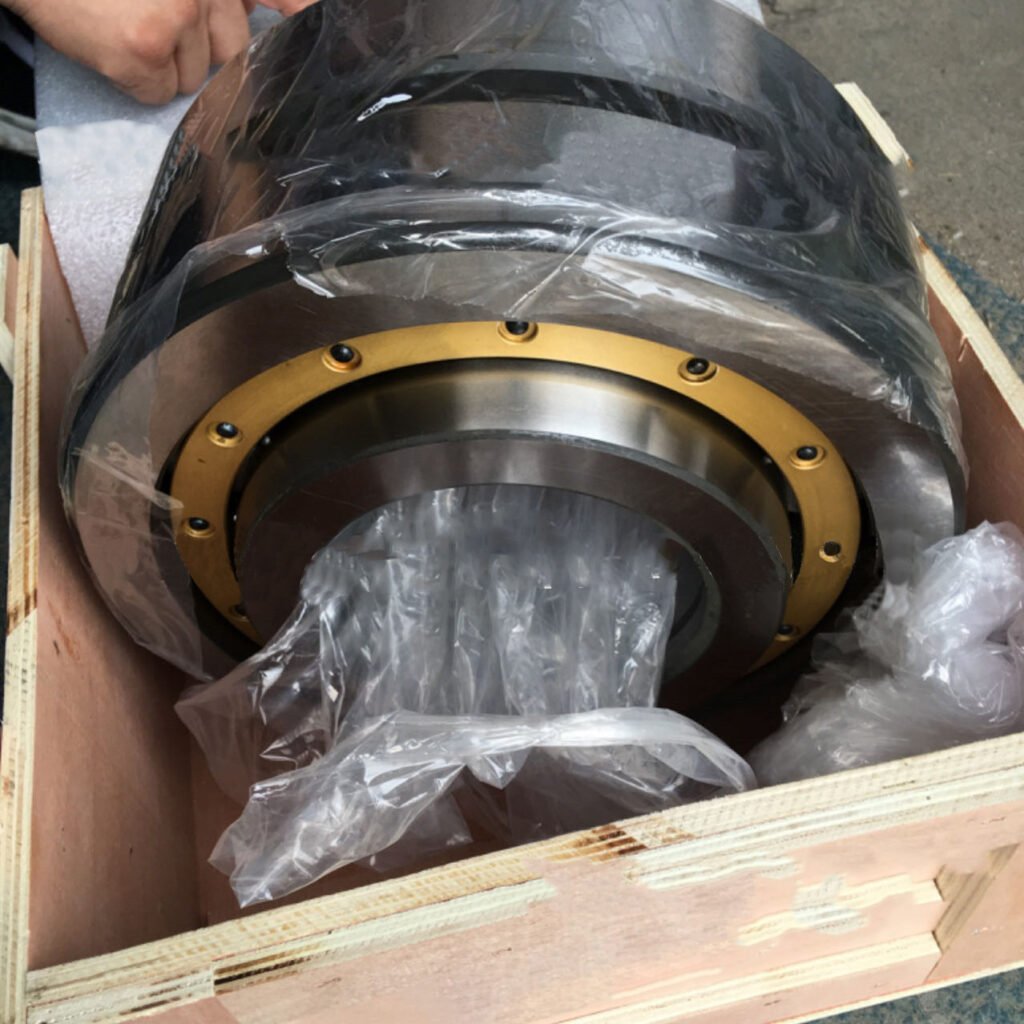
- Wooden cases
- Steel-frame wooden cases
- Bracing structures
- Moisture barriers
- Shock or tilt indicators
Wooden-packaging risk
Solid-wood packaging entering some markets may need to comply with phytosanitary treatment and marking requirements.
Importers should confirm whether the wooden case, pallet, blocking material or dunnage must be:
- Heat-treated
- Fumigated
- ISPM 15 marked
- Made from plywood or other exempt processed wood
- Supported by a treatment certificate
The rule may apply not only to the outer case but also to internal solid-wood supports.
Marking requirements
Confirm whether the following must appear on the packaging:
- Importer name
- Consignee
- Purchase-order number
- Case number
- Product model
- Quantity
- Net weight
- Gross weight
- Dimensions
- Country of origin
- Handling marks
- Center-of-gravity mark
- Lifting points
- “Keep Dry”
- “Do Not Stack”
- “Made in China”
- Project number
- Destination port
Large-bearing considerations
Large slewing bearings often require special handling at ports and inspection stations.
The manufacturer should provide:
- Accurate weight
- Accurate case dimensions
- Lifting instructions
- Center-of-gravity information
- Safe opening instructions
- Photographs before dispatch
- Packing drawings where necessary
An incorrect weight can cause more than a customs delay. It can create equipment-selection and safety problems.
11. Choose the Correct Incoterm
Incoterms do not determine tariff classification or ownership, but they clarify the division of tasks, costs and risks between buyer and seller.
ICC states that Incoterms rules are designed to clarify these responsibilities and reduce costly misunderstandings in international transactions. (ICC – International Chamber of Commerce)
The current edition remains Incoterms 2020, which includes specific provisions concerning export and import clearance responsibilities. (ICC – International Chamber of Commerce)
Why Incoterms affect customs readiness
Different terms assign different obligations for:
- Export clearance
- Main transport
- Insurance
- Import clearance
- Duties and taxes
- Delivery
- Risk transfer
- Document support
Examples
FCA
The seller normally handles export clearance, while the buyer controls the main carriage and import formalities.
FOB
Used for sea or inland-waterway transport, with the buyer typically responsible for import formalities.
CIF
The seller arranges carriage and insurance to the destination port, but the buyer ordinarily handles import clearance.
DAP
The seller delivers to the named destination, but the buyer generally handles import clearance and import duties.
DDP
The seller assumes responsibility for import clearance and duties. This can create serious practical problems when the overseas supplier cannot legally act as importer of record, obtain local registrations or recover import taxes.
The DDP problem
Buyers often request DDP because it appears convenient.
However, before accepting DDP, both parties should confirm:
- Who will act as importer of record?
- Can the seller legally register?
- Who will provide the import license?
- Who will pay and recover VAT or GST?
- Who is responsible for customs inspections?
- Who bears the risk of unexpected trade remedies?
- Can the freight agent legally clear in the seller’s name?
ICC guidance emphasizes that DDP places import-clearance responsibility on the seller, while the buyer must provide assistance with information and documents. (国际商会学院)
For many industrial bearing transactions, FCA, FOB, CIF or DAP may provide clearer and more practical responsibility allocation than an improperly structured DDP arrangement.
Always include the named place
Do not write only:
FOB
Write:
FOB Shanghai Port, Incoterms 2020
Do not write only:
DAP
Write:
DAP Buyer’s Facility, Hamburg, Germany, Incoterms 2020
The named place matters.
12. Involve the Customs Broker Before Shipment
The best time to contact the customs broker is not when the cargo arrives.
It is before the shipping documents are finalized.
What to send for pre-clearance review
Provide the broker with:
- Draft commercial invoice
- Draft packing list
- Product catalog
- Technical drawing
- Product photographs
- Material information
- Proposed HS code
- Country of origin
- Incoterm
- Purchase order
- Freight details
- Certificate list
- End-use description
- Previous ruling, if available
Questions for the broker
Ask:
- Is the tariff classification correct?
- Are additional national tariff digits required?
- Are anti-dumping or countervailing measures applicable?
- Is an import license required?
- Are country-of-origin markings sufficient?
- Is preferential origin available?
- Is the customs value complete?
- Does the importer need additional registration?
- Are the invoice and packing-list descriptions acceptable?
- Are pre-arrival security filings required?
Why early broker review is effective
A broker cannot correct:
- Missing origin marking after the cargo is sealed
- Untreated wooden packaging after arrival
- Missing factory traceability after production
- An importer-registration problem at the port
- A disputed classification instantly
- Incorrect terms embedded in the sales contract
Early review converts customs clearance from a reaction into a controlled process.
13. Manage Customized and High-Value Bearings Differently
A carton containing standard 6205 bearings and a 3.5-meter customized slewing bearing should not follow the same customs-preparation routine.
High-risk characteristics
Apply enhanced review when the shipment involves:
- High unit value
- Oversized dimensions
- Heavy weight
- Custom drawings
- Integrated gears
- Special alloy steel
- Multiple components
- Repair or replacement parts
- Free-of-charge replacements
- Warranty returns
- Temporary imports
- Exhibition samples
- Project cargo
- Government end users
- Dual-use applications
- Third-country invoicing
Customized bearings
The customs broker may need to understand whether the product is:
- A complete functional bearing
- An unfinished ring
- A forged blank
- A machined component
- A gear
- A bearing-and-gear assembly
- A component of a larger machine
The drawing and manufacturing status therefore matter.
Warranty replacements
A replacement sent free of charge is still an import.
The documentation should explain:
- Original invoice reference
- Reason for replacement
- Whether the original product is being returned
- Value for customs purposes
- Warranty status
- Serial or batch information
Writing “no commercial value” without an explanatory basis may generate questions.
Temporary imports
Bearings sent for:
- Testing
- Exhibition
- Repair
- Evaluation
- Reverse engineering
- Failure analysis
may qualify for temporary-import or inward-processing procedures in some countries.
These procedures normally require planning before importation and may involve guarantees, time limits and re-export evidence.
14. Build a Pre-Shipment Customs Control Process
The most reliable importers do not depend on memory.
They use a documented workflow.
Stage 1: RFQ review
Confirm:
- Importing country
- Product type
- Application
- Proposed HS code
- Origin requirements
- Certificate requirements
- Packaging rules
- Incoterm
Stage 2: Purchase-order confirmation
Verify:
- Importer legal name
- Consignee
- Importer registration
- Broker contact
- Approved product description
- Approved marking
- Destination requirements
Stage 3: Production
Preserve:
- Material traceability
- Batch numbers
- Inspection records
- Origin evidence
- Special-process reports
Stage 4: Pre-packing inspection
Check:
- Product model
- Quantity
- Labels
- Country-of-origin marking
- Packaging method
- Required certificates
Stage 5: Draft-document approval
Send draft copies of:
- Commercial invoice
- Packing list
- Certificate of origin
- Transport instructions
- Inspection documents
to the buyer and broker.
Stage 6: Final document reconciliation
Compare:
- Invoice
- Packing list
- shipping booking
- labels
- package count
- weights
- certificate data
Stage 7: Pre-arrival support
The supplier should remain available to provide:
- Additional product descriptions
- Drawings
- Material information
- Clarification letters
- Payment evidence
- Factory statements
The 24-hour principle
Customs questions should be answered quickly.
For project cargo or urgent bearings, the importer should establish in advance:
- A responsible contact at the supplier
- A customs contact at the importer
- A broker contact
- A freight-forwarder contact
Silence between parties is often what turns a simple query into a long delay.
15. What to Do When a Bearing Shipment Is Already Delayed
When customs holds the shipment, do not immediately send random documents.
First identify the exact reason for the hold.
Step 1: Obtain the customs query in writing
Ask the broker for:
- Hold reason
- Customs reference
- Requested document
- Response deadline
- Inspection status
- Potential storage exposure
Step 2: Classify the problem
Most holds relate to:
- Classification
- Valuation
- Origin
- Description
- Quantity
- Licensing
- Marking
- Document inconsistency
- Inspection
- Trade remedy
- Importer registration
Step 3: Build one coordinated response
The importer, broker and supplier should agree on one factual explanation.
Avoid sending contradictory emails from multiple parties.
Step 4: Provide technical evidence
For classification questions, provide:
- Catalog page
- Drawing
- Cross-sectional image
- Product photograph
- Functional explanation
- Material breakdown
- Component list
For valuation questions, provide:
- Purchase order
- Payment record
- Quotation
- Sales contract
- Cost explanation
- Tooling agreement
- Freight invoice
For origin questions, provide:
- Manufacturing-process statement
- Factory records
- Material-source information
- Origin certificate
- Production photographs
- Supplier declaration
Step 5: Correct documents transparently
When an actual clerical error exists, issue a corrected document with:
- Revision date
- Revision number
- Explanation of change
- Authorized signature or stamp where required
Do not quietly replace documents without telling the broker what changed.
Step 6: Record the root cause
After clearance, update the company’s import checklist so the same error does not recur.
A customs delay is expensive. Repeating it is unnecessary.
16. Common Customs Mistakes in Bearing Imports
Mistake 1: Using “machine parts” as the product description
Why it fails: It does not identify the merchandise.
Better approach: State the bearing type, model, material and essential features.
Mistake 2: Letting the supplier choose the final import code alone
Why it fails: The supplier may know only the export-side code.
Better approach: Have the destination-country broker confirm the complete tariff code.
Mistake 3: Changing the HS code only to obtain a lower duty
Why it fails: Duty preference does not override legal classification.
Better approach: Use technical analysis or request an advance ruling.
Mistake 4: Declaring free samples at zero value
Why it fails: Customs may still require a supportable customs value.
Better approach: State that the goods are samples while declaring an appropriate value under local rules.
Mistake 5: Ignoring origin marking
Why it fails: The invoice may state origin while the goods or packaging remain unmarked.
Better approach: Confirm destination marking requirements before packing.
Mistake 6: Ordering first and contacting the broker later
Why it fails: Some problems cannot be corrected after production or packing.
Better approach: Complete the import-compliance review during the RFQ or purchase-order stage.
Mistake 7: Assuming CIF includes customs clearance
Why it fails: CIF covers specified carriage and insurance obligations but normally leaves import clearance to the buyer.
Better approach: Read the selected Incoterm and state the named port precisely.
Mistake 8: Accepting DDP without identifying the importer of record
Why it fails: The overseas supplier may not be legally able to import.
Better approach: Confirm the legal clearance structure before agreeing to DDP.
Mistake 9: Requesting certificates after shipment
Why it fails: Some reports require production-stage traceability or testing.
Better approach: List all document requirements in the purchase order.
Mistake 10: Treating customs clearance as the freight forwarder’s problem
Why it fails: The forwarder can transport goods, but the importer remains central to classification, valuation, origin and compliance.
Better approach: Assign named responsibilities to the importer, broker, forwarder and manufacturer.
17. Pre-Shipment Customs Checklist for Bearing Importers
Before authorizing shipment, confirm the following.
Product
- Bearing type is correctly identified
- Model and drawing number are accurate
- Dimensions match the purchase order
- Material is confirmed
- Complete bearing and bearing parts are clearly distinguished
- Gear, housing and accessory content is declared
Classification
- Destination-country HS or tariff code is confirmed
- Broker has reviewed unusual products
- Trade remedies have been checked
- Advance ruling has been considered where necessary
Value
- Invoice reflects the actual transaction
- Currency is correct
- Unit and total prices are consistent
- Tooling, assists or special charges have been reviewed
- Sample and warranty values are supportable
Origin
- Country of origin is confirmed
- Preferential-origin eligibility has been verified
- Required origin certificate is prepared
- Product or packaging marking is compliant
Documents
- Commercial invoice is complete
- Packing list matches the invoice
- Transport-document instructions are correct
- Purchase order and invoice agree
- Certificate data matches the shipment
- Import permit is available where required
Packaging
- Package count is correct
- Net and gross weights are verified
- Dimensions are accurate
- Wood-packaging requirements are satisfied
- Handling and origin marks are applied
- Large-bearing lifting information is provided
Import readiness
- Importer of record is confirmed
- Customs registration is active
- Broker authorization is complete
- Broker has reviewed draft documents
- Pre-arrival filings are scheduled
- Emergency contacts are identified
18. Frequently Asked Questions
What is the most common reason bearing shipments are delayed at customs?
The most common reason is not necessarily a missing document. It is inconsistent or insufficient information.
Examples include a vague description, disputed HS code, unsupported value, missing origin marking or differences between the invoice and packing list.
Should the bearing manufacturer provide the HS code?
The manufacturer should provide a proposed code and complete technical information. However, the importer should confirm the final destination-country tariff code with its customs broker or customs authority.
Can all bearings use the same HS code?
No. Classification depends on the type of bearing and whether the shipment contains a complete bearing, housing, part, gear or combined assembly.
National tariff schedules also extend the six-digit HS structure differently.
Is “bearing spare parts” an acceptable invoice description?
It is usually too vague.
A stronger description would identify the parts, such as:
Inner and outer rings for spherical roller bearing, machined alloy-steel bearing components
The broker should confirm the final wording and classification.
Can a supplier declare a lower value to reduce duties?
The declared value must comply with the destination country’s customs valuation rules and reflect the actual transaction appropriately.
Artificial undervaluation creates significant compliance risk and should not be used as a cost-saving strategy.
Do free bearing samples need a customs value?
Usually, customs still requires a value, even when the buyer is not charged. The correct method should be confirmed with the broker.
“Free of charge” and “zero customs value” are not necessarily the same thing.
Does CIF include import customs clearance?
Normally, no. Under CIF, the seller arranges specified transport and insurance to the named destination port, while the buyer generally remains responsible for import clearance.
Is DDP always the easiest option for the buyer?
Not necessarily.
DDP may create problems when the overseas seller cannot act as importer of record, obtain local registration or manage local tax obligations. The legal clearance structure must be confirmed before DDP is accepted.
Are material certificates required for customs clearance?
Not always.
However, customs may request additional technical evidence when classification, material composition, origin or declared value is questioned. Project contracts may also require material certificates independently of customs.
When should the customs broker review the documents?
Ideally, before shipment—and for complex bearings, before the purchase order is finalized.
Draft invoice, packing list, classification, origin and packaging information should be reviewed before the cargo leaves the factory.
How can an importer reduce inspection risk?
No importer can guarantee that a shipment will not be inspected.
However, accurate classification, transparent valuation, precise descriptions, consistent documents, compliant marking and a reliable import history can reduce avoidable red flags.
19. Conclusion
Customs delays are often described as logistics problems, but most begin much earlier.
They begin when:
- The product is not clearly defined
- The tariff code is assumed rather than verified
- The invoice description is vague
- The declared value cannot be supported
- Origin is confused with the shipping country
- Packaging rules are checked too late
- The broker is contacted only after arrival
- Buyer and seller misunderstand their Incoterm responsibilities
From a bearing manufacturer’s perspective, the best solution is to integrate customs preparation into the entire procurement process.
Classification should begin when the product is quoted.
Origin requirements should be confirmed before marking.
Certificate requirements should be stated before production.
Packaging rules should be checked before the case is built.
Draft documents should be reviewed before shipment.
The supplier, buyer and customs broker each possess different information. Customs clearance becomes predictable only when those three parties work from one accurate and consistent set of facts.
A well-manufactured bearing deserves an equally well-prepared import process.
The goal is not merely to move the cargo through customs.
The goal is to ensure that the correct bearing reaches the correct project—on time, with its value, origin, classification and documentation fully aligned.
Suggested CTA:
Unsure which technical information your customs broker needs for an upcoming bearing shipment? Send us the bearing model, drawing, destination country and application. Our team can help prepare the product description, packing data and technical documents required for your broker’s pre-shipment review.