
A Manufacturer’s Guide to Getting Faster, More Accurate Bearing Quotations
Key Takeaways
As a bearing manufacturer, one of the most common problems I see in international sourcing is not a lack of quotations—it is a lack of accurate quotations.
A buyer may send us only a bearing number such as 22220, 6205, or a drawing with several missing specifications and ask:
“Please quote your best price.”
The problem is that a basic bearing number does not always define the complete product.
The same basic model may have different:
- Internal designs
- Cages
- Clearances
- Precision grades
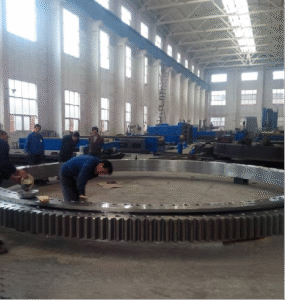
- Seals or shields
- Materials
- Lubricants
- Heat treatments
- Brands
- Load capacities
- Operating requirements
If the RFQ is incomplete, the supplier has only two choices: ask more questions or make assumptions.
As a manufacturer, I strongly prefer the first option.
A good bearing RFQ should allow both buyer and seller to confirm that they are discussing exactly the same product before price, lead time, and commercial terms are negotiated.
The more accurate the RFQ, the faster we can quote, the easier it is to compare suppliers, and the lower the risk of purchasing the wrong bearing.
Executive Summary
A complete bearing RFQ should identify not only the bearing model, but also the technical and commercial conditions that affect manufacturing cost and product selection.
For a standard bearing, buyers should ideally provide the complete designation, dimensions, quantity, brand requirement, precision, clearance, cage, seals, lubrication, material, application, delivery destination, and whether equivalent brands are acceptable.
For custom bearings, large slewing bearings, or unknown replacement bearings, drawings, photographs, machine information, operating speed, loads, temperature, mounting dimensions, gear requirements, and application conditions become much more important.
My recommendation is simple:
Never ask a supplier to guess a bearing specification that your machine depends on.
A professional RFQ should remove ambiguity before quotation. That protects both buyer and manufacturer.
Introduction: Why Incomplete Bearing RFQs Cause So Many Problems
We receive bearing inquiries from buyers around the world almost every day.
Some are extremely clear:
Spherical Roller Bearing 22220 E/C3
100 × 180 × 46 mm
Brass cage
C3 clearance
Quantity: 100 pcs
Application: industrial gearbox
Operating speed: 750 rpm
Temperature: 40–70°C
Equivalent industrial brand acceptable
Delivery: Hamburg, Germany
With an inquiry like this, our engineers and sales team can understand the requirement quickly and prepare a meaningful quotation.
But many inquiries look more like this:
“Need bearing 22220. Please quote.”
Or:
“Need slewing bearing ID 400 mm.”
Or:
“Please quote bearing according to attached photo.”
These are not bad inquiries. They are simply incomplete.
The buyer may know exactly what is needed because the bearing is already used in the machine. But the supplier does not have the same information.
That difference in knowledge creates risk.
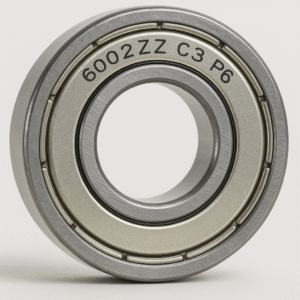
For example, when a buyer writes 6205, do they mean:
- Open bearing?
- ZZ?
- 2RS?
- C3?
- Stainless steel?
- High-temperature grease?
- P5 precision?
- Standard chrome steel?
- A specified international brand?
- An equivalent OEM product?
If the supplier quotes the cheapest possible standard version while the buyer expects a sealed C3 high-temperature bearing, both sides may believe they are discussing the same product when they are not.
This is exactly what a good RFQ should prevent.
In this guide, I will explain what information I recommend including in a bearing RFQ so manufacturers can quote faster, identify the correct product, and reduce misunderstanding before an order is placed.
Table of Contents
- Why Bearing RFQs Need More Detail Than a Basic Model Number
- Start with the Complete Bearing Designation
- Always Provide Dimensions When Possible
- Specify Quantity Clearly
- Tell the Supplier Whether Brand Is Mandatory
- Specify Material, Precision, Clearance, Cage, Seals, and Lubrication
- Explain the Bearing Application
- Provide Operating Conditions for Technical Selection
- Include Drawings for Custom and Large Bearings
- What to Provide When You Do Not Know the Bearing Model
- Special Information Required for Slewing Bearings
- Tell the Supplier What Quality Documents You Need
- Provide Delivery Destination and Required Lead Time
- State Whether Alternatives Are Acceptable
- Common RFQ Mistakes That Cause Wrong Quotations
- A Complete Bearing RFQ Template
- Frequently Asked Questions
- Conclusion
1. Why Bearing RFQs Need More Detail Than a Basic Model Number
A bearing model is often the starting point of an RFQ, but it may not be the complete specification.
Consider a common deep groove ball bearing:
6205
This basic designation identifies the general bearing series and bore size.
But a real purchase requirement could be:
- 6205
- 6205-Z
- 6205-ZZ
- 6205-2RS
- 6205-C3
- 6205-2RS-C3
- Stainless steel 6205-2RS
- P5 precision 6205
- High-temperature 6205
- Low-noise motor-grade 6205
These products may have the same nominal dimensions but different performance and prices.
The same issue becomes even more important with:
- Spherical roller bearings
- Cylindrical roller bearings
- Angular contact bearings
- Precision spindle bearings
- Thin-section bearings
- Crossed roller bearings
- Slewing bearings
- Customized bearings
A missing suffix can represent a major technical difference.
Manufacturer’s Advice
If you have the complete designation printed on the original bearing, send the complete designation exactly as shown.
Do not remove suffixes because they appear unimportant.
A suffix that seems like only two or three letters may define the cage, clearance, precision, seal, lubrication, or internal design.
2. Start with the Complete Bearing Designation
For standard bearings, the complete designation is normally the most valuable information in the RFQ.
Instead of:
22220
provide:
22220 E/C3
or whatever complete designation is actually required.
For angular contact bearings, the difference can be even more significant because the suffix may define:
- Contact angle
- Precision
- Preload
- Cage
- Universal matching
- Pairing arrangement
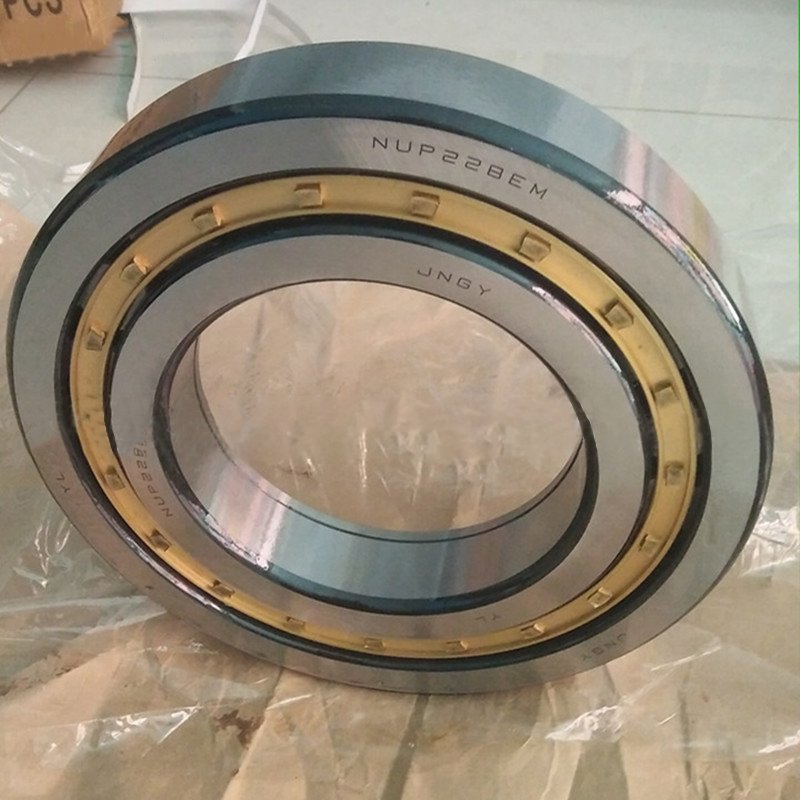
For cylindrical roller bearings, buyers should pay attention to configurations such as:
- NU
- NJ
- NUP
- N
- NF
These are not interchangeable in every application.
If You Are Replacing an Existing Bearing
Send us a clear photograph showing:
- Brand
- Complete model
- Suffix
- Country marking
- Any additional numbers
If the marking is damaged, take photographs from several angles.
Even a partially visible number may help us identify the correct series.
Do Not “Simplify” the Manufacturer’s Number
Another common RFQ problem occurs when buyers convert a manufacturer-specific designation into a simplified generic model.
This can remove important information.
If your machine originally uses a specific manufacturer’s complete designation, send us that original number first. We can then determine whether an equivalent product is available.
3. Always Provide Dimensions When Possible
Even when you already know the bearing model, I recommend including dimensions whenever possible.
The three most important dimensions for many standard bearings are:
- d – Bore diameter / ID
- D – Outside diameter / OD
- B – Width
For example:
Bearing: 22220 E/C3
ID: 100 mm
OD: 180 mm
Width: 46 mm
Why include dimensions if the model already gives us the answer?
Because dimensions provide an additional verification layer.
If the buyer gives us model 22220 but dimensions 100 × 215 × 73 mm, we immediately know something is inconsistent.
It is much better to discover that during quotation than after production.
For Non-Standard Bearings
Additional dimensions may include:
- Shoulder diameter
- Flange diameter
- Bolt circle diameter
- Hole diameter
- Raceway position
- Gear pitch diameter
- Tooth number
- Module
- Pressure angle
- Overall height
- Mounting-hole quantity
- Seal-groove dimensions
The more customized the bearing, the less useful a simple model number becomes.
4. Specify Quantity Clearly
Quantity directly affects bearing pricing.
A manufacturer may quote very different prices for:
- 2 pcs
- 20 pcs
- 200 pcs
- 2,000 pcs
This happens because production costs are distributed across the batch.
Small production runs may still require:
- Engineering review
- Machine setup
- Tooling preparation
- First-piece inspection
- Heat-treatment setup
- Grinding adjustment
- Quality documentation
The larger the batch, the lower the setup cost per bearing can become.
Tell Us Both Trial Quantity and Annual Demand
For a new project, a very useful RFQ format is:
Prototype quantity: 10 pcs
Expected annual demand: 5,000 pcs
This tells us that the first quotation should not be evaluated as a one-time order only.
As a manufacturer, we may be able to offer:
- Prototype pricing
- Mass-production pricing
- Tooling amortization
- Annual contract pricing
- Scheduled deliveries
A buyer can therefore make a much more accurate commercial decision.
5. Tell the Supplier Whether Brand Is Mandatory
This information can completely change the quotation.
There are three very different RFQs:
SKF 22220 required. No alternatives.
SKF preferred, but equivalent brands may be considered.
Any qualified industrial manufacturer acceptable.
These are not the same sourcing requirement.
If your company must use a specified brand because of:
- OEM requirements
- Customer approval
- Warranty conditions
- Equipment certification
- Internal approved vendor lists
tell the supplier clearly.
If alternatives are acceptable, say so.
This allows suppliers to propose cost-effective solutions rather than guessing whether substitutions are permitted.
Manufacturer’s Advice
Do not write:
“SKF or same quality.”
This phrase is too subjective.
Instead, identify the technical requirements the alternative must meet:
- Dimensions
- Load rating
- Precision
- Clearance
- Cage
- Lubrication
- Speed
- Temperature
- Expected life
This makes alternative-brand evaluation much more professional.
6. Specify Material, Precision, Clearance, Cage, Seals, and Lubrication
These technical details can significantly affect both price and performance.
Material
Common requirements may include:
- GCr15 / 52100 / 100Cr6 bearing steel
- Stainless steel
- 420 stainless steel
- 440C stainless steel
- 42CrMo
- Carburized steel
- Ceramic rolling elements
- Full ceramic materials
Do not request “stainless steel bearing” without identifying the material when corrosion resistance is important.
Different stainless steels provide different hardness, corrosion resistance, and cost.
Precision
Typical precision requirements may include:
- Normal / P0
- P6
- P5
- P4
- P2
Higher precision usually requires additional manufacturing and inspection.
If P5 is required, tell us.
If normal precision is sufficient, do not unnecessarily specify P5 simply because “higher is better.”
Internal Clearance
Typical radial clearance categories include:
- C2
- CN / Normal
- C3
- C4
- C5
Internal clearance strongly affects operating temperature, vibration, and bearing life.
C3 is not automatically better than normal clearance.
The correct clearance depends on:
- Fit
- Temperature
- Speed
- Load
- Shaft and housing conditions
Cage
Possible cage types include:
- Pressed steel
- Machined brass
- Polyamide
- PEEK
- Other engineering polymers
For some applications, cage material matters greatly.
Seals and Shields
Specify whether you need:
- Open
- Z
- ZZ / 2Z
- RS
- 2RS
Do not assume every manufacturer interprets informal terminology exactly the same way.
Lubrication
If lubrication is critical, specify:
- Grease brand
- Grease type
- Temperature range
- Food-grade requirement
- Low-temperature requirement
- High-speed requirement
- Oil lubrication
- Oil-free requirement
For custom projects, operating conditions may allow the manufacturer to recommend the most suitable lubricant.
7. Explain the Bearing Application
One of the most useful sentences a buyer can add to an RFQ is:
“The bearing will be used in…”
Application helps us understand whether the requested bearing makes sense.
For example:
Application: CNC rotary table
immediately tells our engineer to consider:
- Accuracy
- Rigidity
- Runout
- Preload
- Rotational smoothness
While:
Application: crusher conveyor
creates a very different engineering picture involving:
- Heavy loads
- Contamination
- Shock
- Sealing
- Reliability
Other useful applications include:
- Electric motor
- Gearbox
- Crane
- Excavator
- Mining machine
- Food-processing equipment
- Robot
- Steel mill
- Wind turbine
- Agricultural equipment
- Packaging machine
- Marine equipment
Why Manufacturers Need Application Information
Sometimes buyers request a technically possible bearing that is not ideal for the application.
If we understand the machine, we may identify risks before quoting.
For example, we may recommend:
- Different clearance
- Better sealing
- Alternative grease
- Brass cage
- Higher precision
- Different bearing arrangement
This is much better than manufacturing exactly what was requested and discovering later that the specification was incomplete.
8. Provide Operating Conditions for Technical Selection
When the RFQ is for an existing standard bearing and the complete designation is known, detailed operating data may not always be necessary.
But for:
- New projects
- Custom bearings
- High-speed bearings
- High-temperature applications
- Precision equipment
- Heavy-load applications
- Bearing replacement problems
operating information becomes very important.
Useful data includes:
Rotational Speed
Provide:
Normal speed: 800 rpm
Maximum speed: 1,200 rpm
rather than simply:
High speed.
Temperature
Provide:
Continuous operating temperature: 40–65°C
Maximum short-term temperature: 80°C
Temperature affects:
- Lubrication
- Internal clearance
- Seal material
- Heat treatment
- Dimensional stability
Loads
When available, provide:
- Radial load
- Axial load
- Moment load
- Static load
- Dynamic load
- Shock load
For slewing bearings, load information is especially important.
Duty Cycle
Tell the supplier whether the machine operates:
- Occasionally
- 8 hours/day
- 16 hours/day
- 24/7 continuous duty
Environment
Important conditions may include:
- Dust
- Water
- Chemicals
- Food contact
- Vacuum
- Saltwater
- Outdoor weather
- High humidity
- Cleanroom operation
These factors affect materials, sealing, lubrication, and corrosion protection.
9. Include Drawings for Custom and Large Bearings
For custom bearings, drawings are usually more important than model numbers.
A proper drawing should ideally include:
- ID
- OD
- Width
- Raceway geometry
- Mounting dimensions
- Hole positions
- Gear details
- Tolerances
- Material
- Heat treatment
- Surface hardness
- Precision requirements
- Seal structure
- Lubrication holes
If the drawing is controlled by your engineering department, provide the drawing number and revision.
For example:
Drawing No.: AB-2026-017
Revision: C
This prevents a serious problem:
Buyer quotes Revision A while engineering is already using Revision C.
Confirm Which Dimensions Are Critical
Not every dimension carries the same functional importance.
If certain dimensions are especially important for assembly, tell the manufacturer.
Examples:
- Bearing seat diameter
- Mounting-hole location
- Gear runout
- Raceway position
- Flange thickness
- Axial height
This helps the manufacturer plan process controls correctly.
10. What to Provide When You Do Not Know the Bearing Model
This situation is very common.
The bearing is installed inside an old machine.
The original manual is missing.
The marking is damaged.
The machine manufacturer no longer supports the model.
In this case, do not guess.
Send us as much physical information as possible.
Start with Photographs
Provide:
- Full front view
- Side view
- Back view
- Close-up of all markings
- Installed position
- Shaft
- Housing
- Machine nameplate
Measure the Bearing
At minimum:
- ID
- OD
- Width
When applicable:
- Flange dimensions
- Bolt-hole pattern
- Gear dimensions
- Raceway location
Tell Us the Machine
Provide:
- Machine manufacturer
- Machine model
- Year
- Bearing installation position
- Function
Sometimes the machine information helps identify the bearing even when the model is unreadable.
Never Use a Photograph Alone When Dimensions Are Available
Perspective can make two very different bearings look similar in a photograph.
A 90 mm bore and a 100 mm bore may be impossible to distinguish visually.
Photos plus dimensions provide much higher identification accuracy.
11. Special Information Required for Slewing Bearings
Slewing bearing RFQs require more information than standard ball or roller bearings.
Writing only:
“Need slewing bearing ID 400 mm.”
is usually insufficient.
At least provide:
- Inside diameter
- Outside diameter
- Overall height
- Bearing type
- Gear type
- Quantity
Bearing Type
Specify whether it is:
- Four-point contact ball
- Double-row ball
- Crossed roller
- Three-row cylindrical roller
- Other custom design
Gear Configuration
Specify:
- No gear
- Internal gear
- External gear
If geared, provide:
- Module
- Number of teeth
- Pressure angle
- Gear width
- Gear accuracy if required
Mounting Holes
Provide:
- Hole quantity
- Hole diameter
- Bolt-circle diameter
- Thread specification
- Through hole or tapped hole
Loads
Where possible:
- Axial load
- Radial load
- Tilting moment
Application
Tell us whether it is used for:
- Crane
- Excavator
- Rotary table
- Wind turbine
- Mining equipment
- Marine crane
- Packaging machine
- Milling machine
- Radar
- Solar tracker
Two slewing bearings with similar dimensions may have completely different internal structures depending on load conditions.
12. Tell the Supplier What Quality Documents You Need
Document requirements can affect quotation and lead time.
If your project requires specific inspection or certification, mention it at the RFQ stage.
Examples include:
- Material certificate
- Dimensional inspection report
- Hardness report
- Heat-treatment report
- Ultrasonic testing report
- Magnetic-particle testing
- Roughness report
- Runout report
- Noise and vibration report
- Certificate of conformity
- Third-party inspection
- Customer witness inspection
Do not wait until production is finished to request process-specific documentation.
Some records must be created during manufacturing.
Manufacturer’s Advice
Separate required documents from preferred documents.
For example:
Required: Material Certificate + Final Dimensional Report
Optional: Third-party inspection quotation separately
This allows the supplier to calculate cost accurately.
13. Provide Delivery Destination and Required Lead Time
A quotation is incomplete if neither party knows where the goods are going.
Provide:
- Country
- City
- Port or airport
- Postal code when relevant
For example:
Destination: Toronto, Canada
or:
CIF Hamburg Port, Germany
Destination affects:
- Freight
- Packaging
- Customs documentation
- Shipping method
- Transit time
Tell Us When You Actually Need the Bearing
Do not simply write:
“Urgent.”
Provide a realistic date:
Required at our factory no later than October 30.
This allows the manufacturer to calculate backward:
- Shipping time
- Customs time
- Production
- Inspection
- Raw-material preparation
If normal lead time cannot meet the target, we can discuss alternatives early.
14. State Whether Alternatives Are Acceptable
This is one of the easiest ways to obtain a useful quotation.
Write one of the following:
Exact model required. No alternative.
or:
Equivalent brand acceptable.
or:
Dimensional equivalent acceptable, but technical approval required before order.
or:
Manufacturer may recommend an alternative solution.
This avoids unnecessary discussion.
Sometimes the original model is:
- Discontinued
- Extremely expensive
- Long lead time
- Difficult to source
If alternatives are allowed, a manufacturer may be able to propose a technically suitable replacement.
15. Common RFQ Mistakes That Cause Wrong Quotations
Sending Only a Basic Model
Example:
Need 6208.
Problem:
Missing seal, clearance, brand, quantity, and other requirements.
Removing the Suffix
Problem:
Important technical information may be lost.
Sending Only a Photo
Problem:
Similar bearing series may look almost identical.
Providing Dimensions Without Units
Writing:
100 × 180 × 46
is less clear than:
100 × 180 × 46 mm.
Asking for “Best Quality”
Quality must be defined technically.
Instead of:
Best quality bearing
specify:
- Material
- Precision
- Clearance
- Application
- Expected performance
Asking for “Best Price” Before Defining the Product
We can only provide the best price after we know exactly what product we are pricing.
Hiding the Application
Some buyers worry that telling the supplier the application will increase the price.
In reality, application information usually helps us prevent specification mistakes.
Not Providing Quantity
Quantity is essential to calculate production economics.
Comparing Quotations with Different Specifications
Supplier A may quote:
Standard P0, CN clearance, steel cage.
Supplier B may quote:
P5, C3 clearance, brass cage.
Comparing only their prices would be meaningless.
Before comparing quotations, normalize the specification.
16. A Complete Bearing RFQ Template
A professional RFQ does not need to be complicated.
You can use the following format:
Standard Bearing RFQ
Bearing Type: Spherical Roller Bearing
Model: 22220 E/C3
Dimensions: 100 × 180 × 46 mm
Quantity: 100 pcs
Material: GCr15 / equivalent bearing steel
Cage: Brass
Clearance: C3
Precision: Normal
Lubrication: Standard factory grease / Open bearing
Brand Requirement: Equivalent industrial brands acceptable
Application: Industrial gearbox
Operating Speed: 750 rpm normal / 1,000 rpm maximum
Temperature: 40–70°C
Required Documents: Material Certificate + Inspection Report
Destination: Hamburg, Germany
Required Delivery: Before October 30
Annual Demand: Approx. 500 pcs
Custom Bearing RFQ
Product: Custom Thin-Section Bearing
Drawing: ABC-2026-017 Rev. C
Dimensions: 100 × 120 × 10 mm
Quantity: Prototype 10 pcs / Annual demand 5,000 pcs
Material: GCr15
Precision: P5
Application: Industrial automation rotary table
Speed: 800–1,200 rpm
Operating Temperature: 40–65°C continuous
Load: Drawing attached
Lubrication: Manufacturer recommendation requested
Required Reports: Dimensional inspection + material certificate
Delivery Destination: Hamburg, Germany
Alternative Design: May be proposed for engineering approval
An RFQ like this gives the manufacturer enough information to do much more than provide a price.
It allows us to evaluate whether the product itself is correct.
17. Frequently Asked Questions
Is the bearing model alone enough for an RFQ?
Sometimes, if the complete manufacturer designation is known and the requirement is a standard branded product. However, quantity, brand, destination, and commercial requirements are still needed for an accurate quotation.
What if I do not know the bearing suffix?
Send clear photographs of the original bearing and packaging. Do not guess the suffix.
What if the bearing marking is damaged?
Provide dimensions, photographs, machine information, and application details. A manufacturer may still be able to identify the product.
Should I tell the supplier my application?
Yes. Application information can help identify technical risks and prevent incorrect product selection.
Why does the supplier keep asking me technical questions instead of quoting immediately?
Usually because the supplier is trying to avoid guessing.
For industrial bearings, additional technical questions are often a positive sign that the manufacturer wants to confirm the correct specification.
Should I provide my annual volume if I only need samples now?
Yes. Prototype pricing and mass-production pricing can be very different.
Do I need to send a drawing for a standard bearing?
Usually not if the complete designation is known. Drawings become much more important for custom bearings, slewing bearings, obsolete parts, or products with special interfaces.
Can I ask several suppliers to recommend different solutions?
Yes, but make sure every supplier receives the same operating conditions. Otherwise, the resulting quotations cannot be compared fairly.
Conclusion
From a manufacturer’s perspective, the purpose of a bearing RFQ is not simply to obtain a price.
Its real purpose is to make sure the buyer and seller are discussing exactly the same bearing.
When an RFQ contains only a partial model number, the supplier must make assumptions. Every assumption increases the possibility of:
- Wrong product identification
- Incorrect pricing
- Specification mismatch
- Requotation
- Delayed purchasing
- Engineering changes
- Wrong goods being manufactured
A complete RFQ eliminates these problems before they become expensive.
For standard bearings, begin with the complete designation, dimensions, quantity, brand requirement, precision, clearance, cage, seals, and lubrication.
For new projects and custom bearings, add the application, operating speed, temperature, loads, drawings, inspection requirements, and expected annual demand.
For unknown replacement bearings, send photographs, dimensions, machine information, and every visible marking.
The principle I recommend to every bearing buyer is simple:
The supplier should never have to guess a specification that matters to your machine.
A few additional minutes spent preparing the RFQ can save days of emails, prevent incorrect quotations, improve supplier comparison, and significantly reduce the risk of purchasing the wrong bearing.
Suggested CTA
Need Help Identifying a Bearing Before Sending Your RFQ?
If you have an incomplete bearing number, an old bearing with damaged markings, a drawing, or only photographs from the machine, our engineering team can help review the available information before quotation.
Send us the model, dimensions, photographs, application, quantity, and operating conditions you have available. We can help identify missing information so both sides confirm the same product before pricing begins.
Related Articles
- How to Compare Bearing Quotations from Different Suppliers
- How to Reduce Bearing Procurement Costs Without Sacrificing Quality
- How to Avoid Fake Bearings
- How to Choose the Right Bearing Supplier in China
- Bearing Import Documents Checklist
- Bearing Suffix Meanings Explained