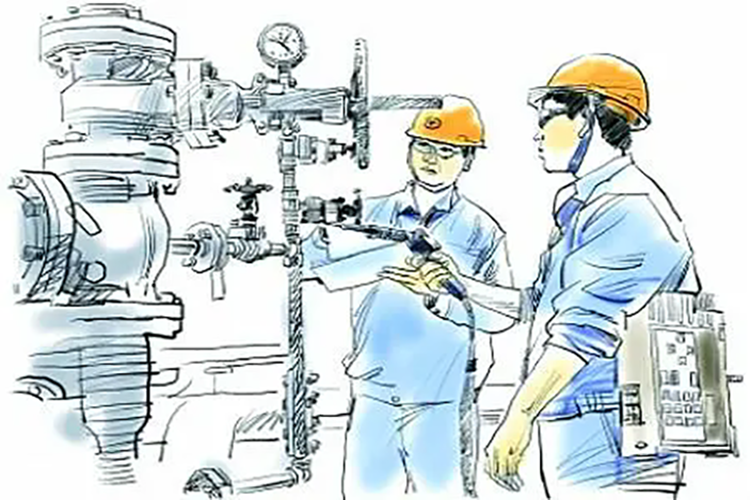

Based on proportional calculation, the steel balls in slewing bearings are generally taken as height H×0.375 or 0.45
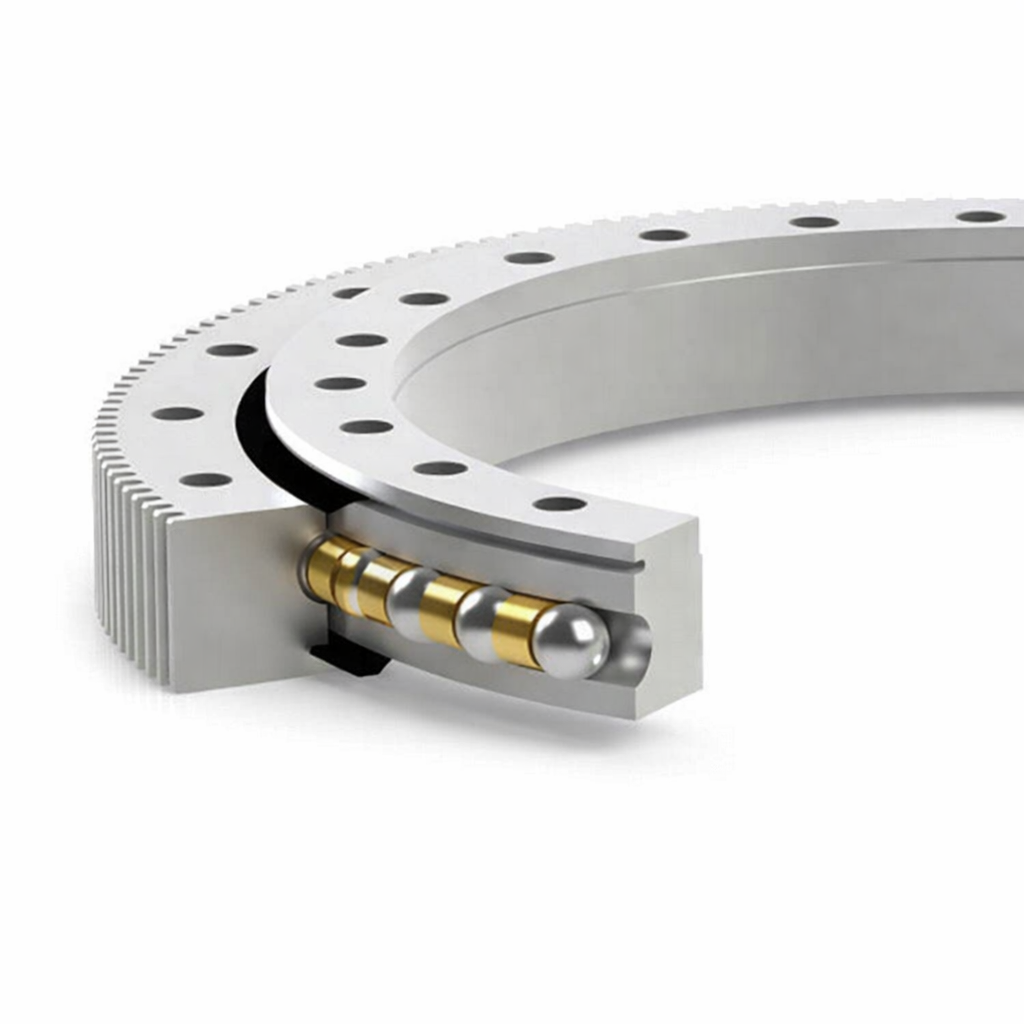
As shown in the figure, if the bearing ring height is 70mm, then 70×0.375 = 26.25 or 70×0.45 = 31.5 In this case, a diameter of ø30 is suitable.
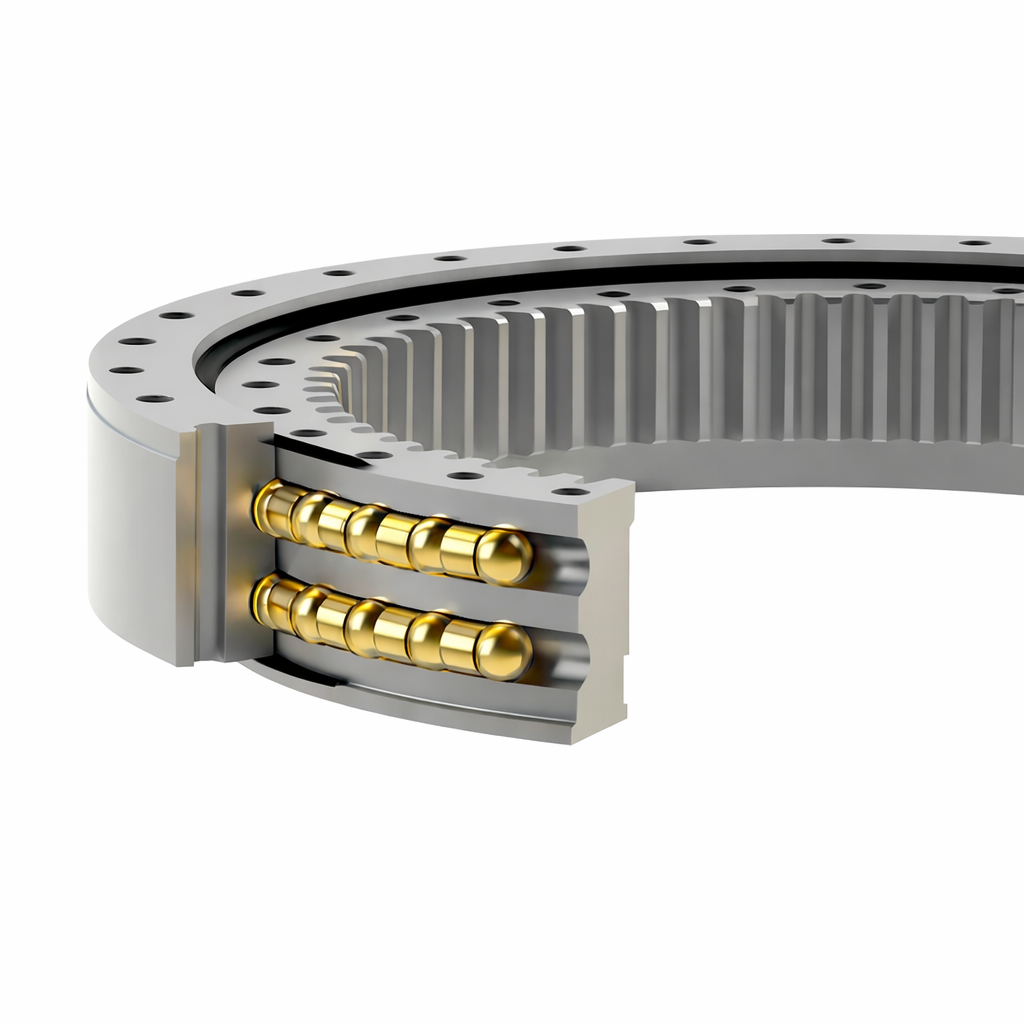
For double-row ball bearings, the general formula is height H÷3.8 For example, if the ring height is 120mm, then 120÷3.8 = 31.5789474 Therefore, ø30 steel balls are suitable.
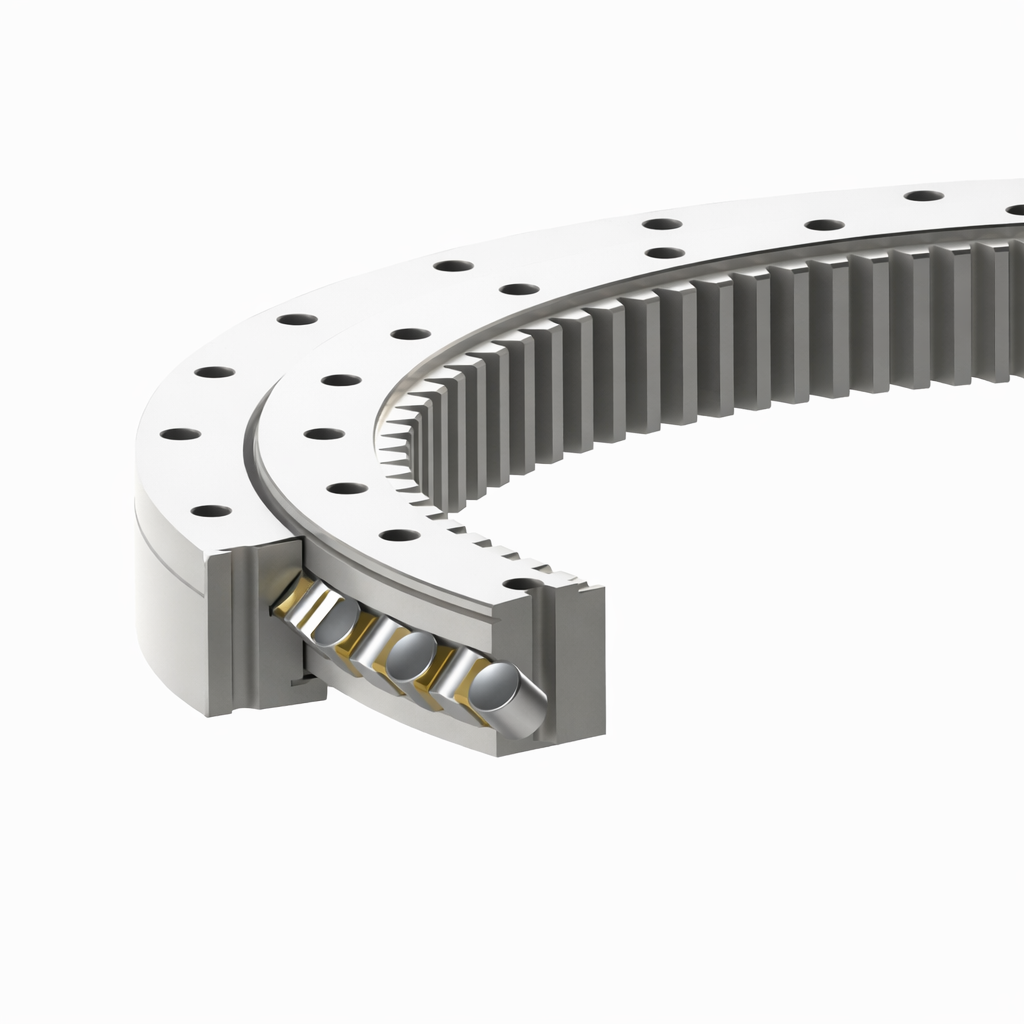
For crossed roller bearings, the calculation is height H×0.45 – (5 or 10). For bearings under 40mm, subtract 5; for bearings over 50mm, subtract 10 For example, for a bearing 90mm high, 90×0.45 = 40.5, 40 – 5 = 35 In this case, ø35×34.5 rolling balls are suitable.
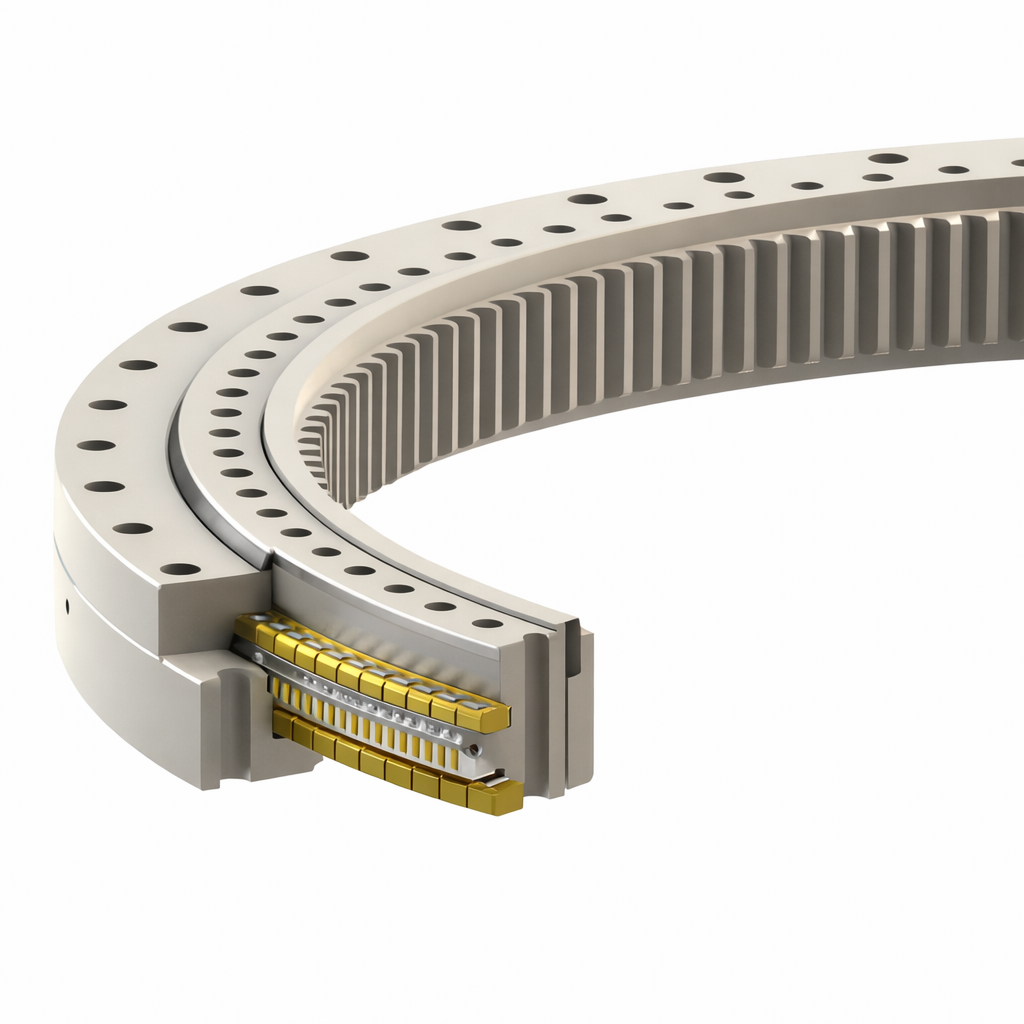
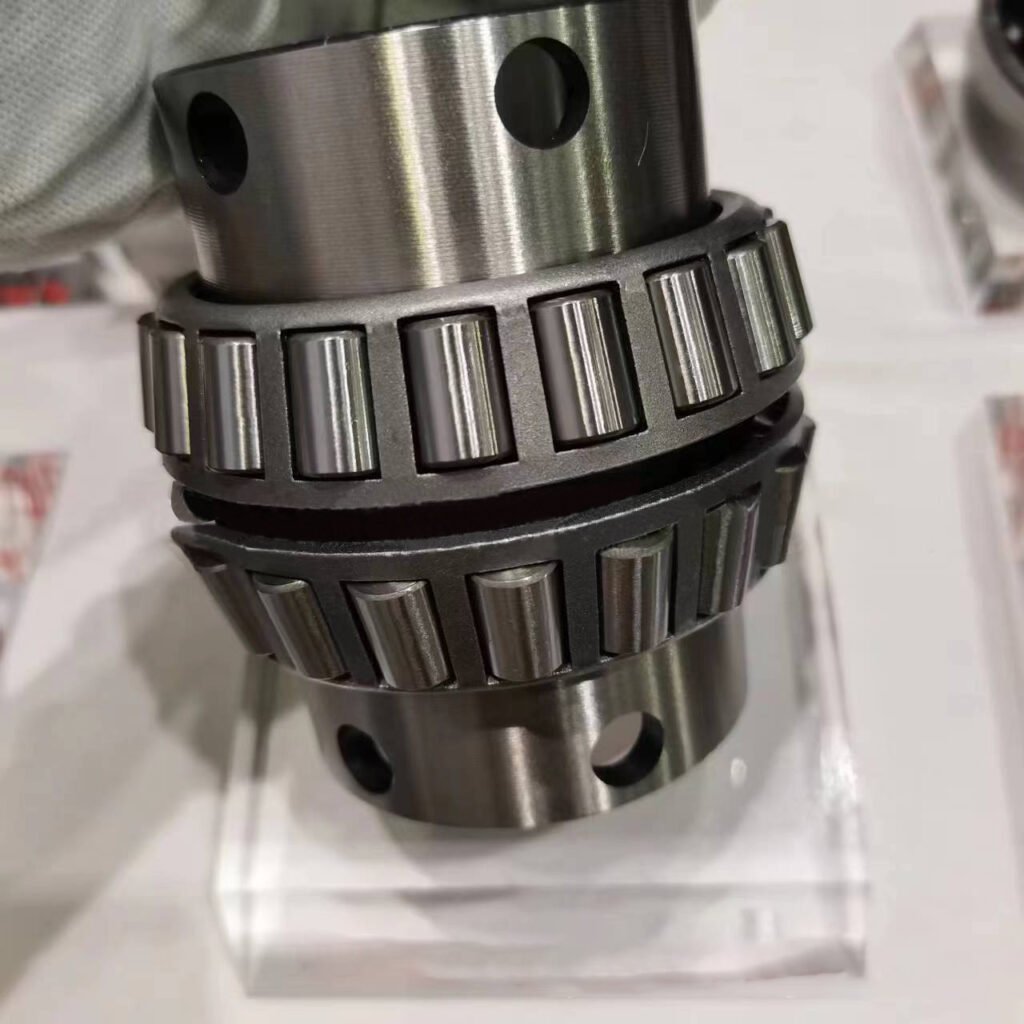
The size of the three rows of rollers is also H÷5.2 For example, if the ring height is 210, then 210÷5.2 = 40.3846154 Therefore, the main thrust is ø40×39.5 Finally, according to the ball arrangement, it is as follows:
Three-row cylindrical roller internal gear slewing bearing, see Figure 3 The nominal diameter combinations of the rolling elements are: upper row/lower row/radial: 25/20/16, 32/25/20, 40/32/25, 50/40/25. Of course, for double-row unequal diameter balls, the ball arrangement is as follows:
Double-row unequal diameter ball internal gear slewing bearing, see Figure 2 The nominal diameter combinations of the rolling elements are: upper row/lower row: 30/25, 40/30, 50/40, 60/50.