Skip to content
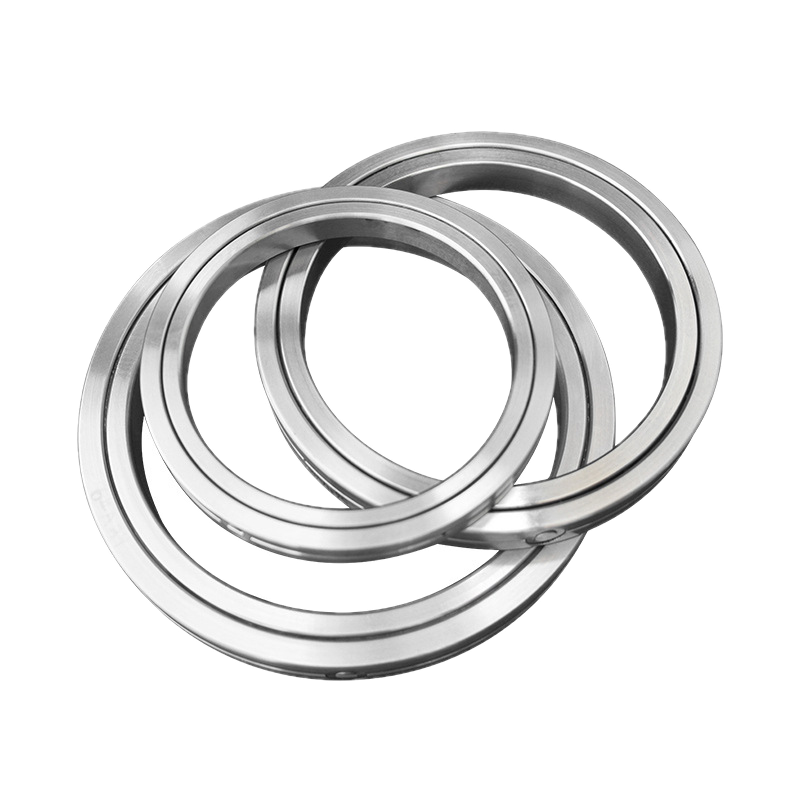
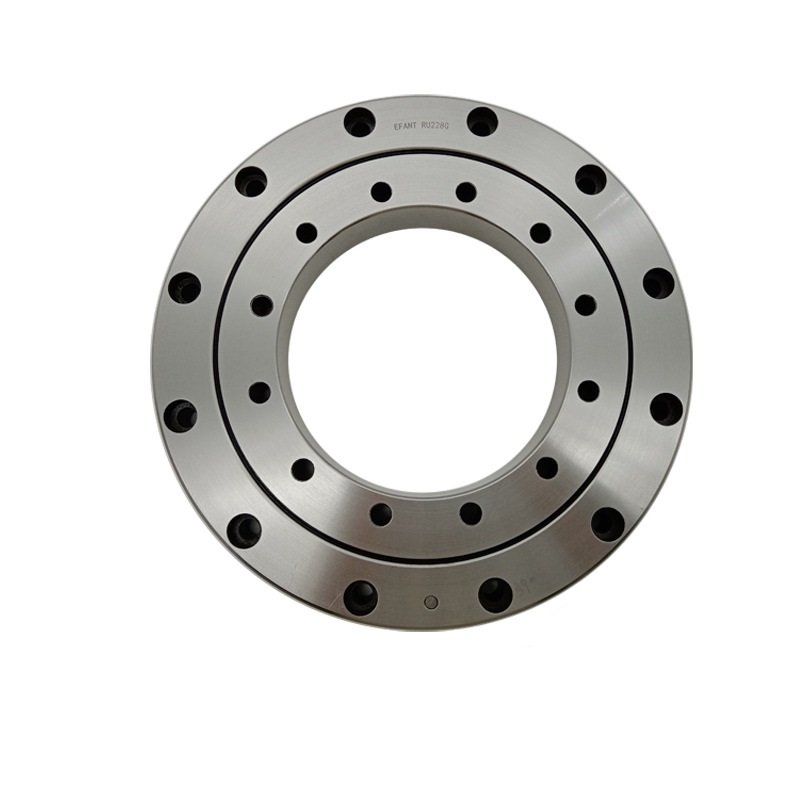
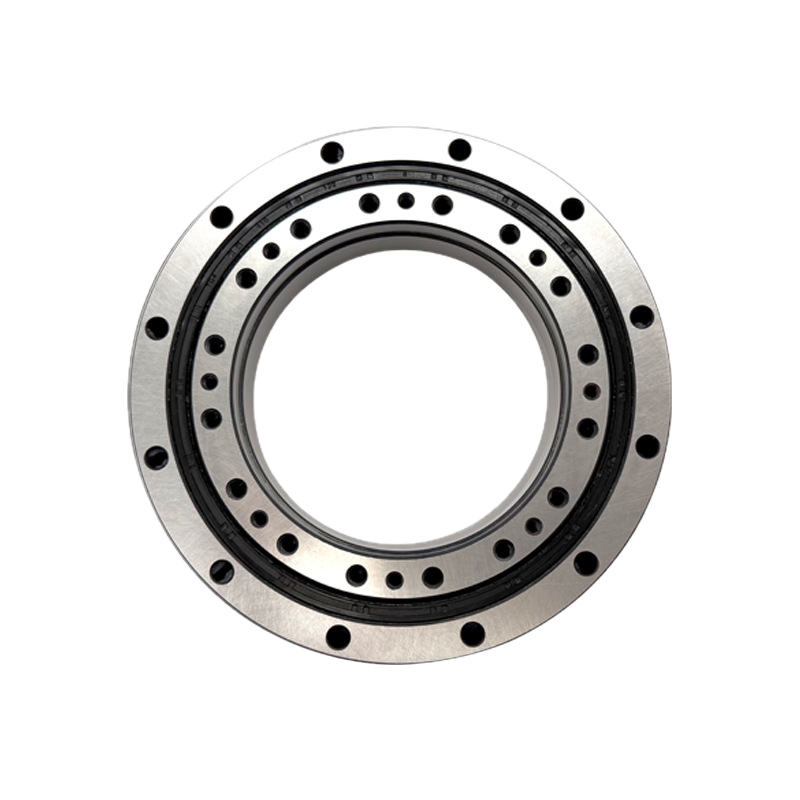
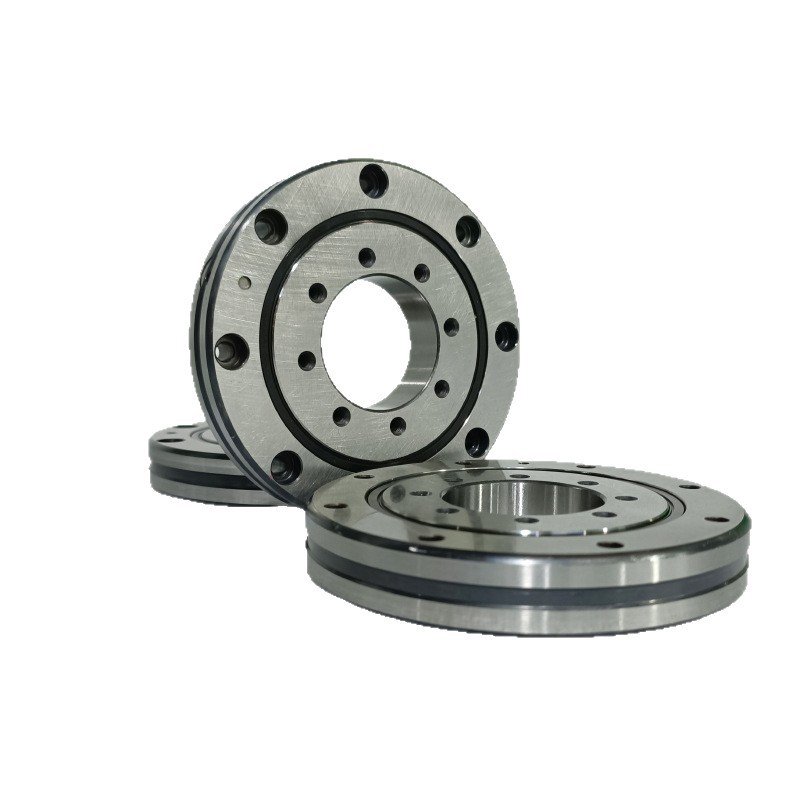
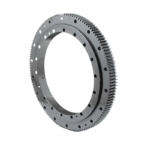
Crossed Roller Bearing is a high-precision rolling bearing in which cylindrical rollers are arranged alternately at 90 degrees between inner and outer rings, enabling it to simultaneously support radial, axial, and moment loads with high rigidity, compact design, and excellent rotational accuracy for applications such as robotics, machine tools, and precision equipment.
1. Single Bearing Configuration
One crossed roller bearing supports combined loads.
Compact design with high rigidity.
Common in robotic joints and precision rotary tables.
Advantage: Simplified structure and minimal space requirement.
2. Back-to-Back Arrangement (DB Configuration)
Two crossed roller bearings mounted with load lines diverging outward.
Provides higher moment rigidity and improved overturning resistance.
Suitable for heavy-load rotary platforms and precision machine tools.
Advantage: Maximum structural stiffness and axial stability.
3. Face-to-Face Arrangement (DF Configuration)
Two bearings mounted with load lines converging inward.
Better tolerance for shaft misalignment.
Used in applications requiring alignment flexibility.
Advantage: Improved mounting tolerance.
4. Tandem Arrangement (DT Configuration)
Bearings mounted in the same load direction.
Increases axial load capacity in one direction.
Applied in systems with dominant one-way axial loads.
Advantage: Higher axial capacity without increasing bearing size.
5. Preloaded Pair Combination
Bearings supplied with controlled preload.
Eliminates internal clearance and increases rotational accuracy.
Ideal for high-precision CNC and semiconductor equipment.
Advantage: Enhanced positioning accuracy and reduced vibration.
Function:
Provides one raceway surface and is mounted to the shaft or rotating element.
Typical Materials:
High carbon chromium bearing steel (GCr15 / AISI 52100)
High hardness (HRC 58–64 after heat treatment)
Excellent rolling fatigue resistance
Carburized alloy steel (e.g., 20CrMnTi)
Used for heavy-duty or impact-load applications
Stainless steel (AISI 440C)
For corrosion-resistant environments
Function:
Forms the outer raceway and is fixed to the housing or structural frame.
Typical Materials:
GCr15 / AISI 52100 bearing steel (standard use)
Alloy structural steel (large-diameter or slewing types)
Stainless steel (corrosive environments)
3. Cylindrical Rollers
Function:
Rolling elements arranged alternately at 90° to support radial, axial, and moment loads simultaneously.
Typical Materials:
High carbon chromium steel (GCr15 / AISI 52100)
High dimensional accuracy
Superior wear and fatigue resistance
Ceramic rollers (Si₃N₄ – silicon nitride)
Lightweight
Electrically insulating
High-speed capability
4. Cage or Spacer (Retainer)
Function:
Maintains proper roller spacing and prevents roller skewing or contact.
Typical Materials:
Brass cage (HPb59-1 or similar)
High strength
Suitable for heavy-duty and high-precision use
Engineering plastic (PA66 with glass fiber reinforcement)
Lightweight
Low noise
Used in high-speed or compact designs
Steel spacer retainers
Common in high-rigidity industrial applications
5. Seals (Optional)
Function:
Protect internal components from dust, moisture, and contaminants.
Typical Materials:
NBR (Nitrile Rubber) with steel reinforcement
FKM (Viton) for high-temperature environments
6. Lubricant
Function:
Reduces friction, minimizes wear, and improves heat dissipation.
Typical Options:
Lithium-based grease (general industrial)
Synthetic grease (high-speed, precision equipment)
Oil lubrication (high-speed CNC or automation systems)
Crossed roller bearings, due to their compact inner and outer rings and 90° crossed roller arrangement, possess high rigidity, high precision, and high load capacity (withstanding radial, axial, and torque loads). Common series include CRB (integral outer ring), CRBC (high precision), and CRBH (integral structure). Specifications mainly include inner diameter d, outer diameter D, width B, basic dynamic load rating C, and static load rating C0.
| Model | Inner diameter (d) (mm) | Outer diameter (D) (mm) | Width (B) (mm) | Rated dynamic load (kN) | Rated static load (kN) |
| CLS 14 | 14 | 41.8 | 12.5 | 3.5 | 3.2 |
| CLS 17 | 17 | 49 | 12.5 | 4.8 | 4.7 |
| CLS 20 | 20 | 56.5 | 12 | 5.8 | 6.3 |
| CLS 25 | 25 | 67 | 15 | 8.8 | 10.1 |
| CLS 32 | 32 | 90 | 18 | 14.5 | 18.5 |
| CLS 40 | 40 | 105 | 19.5 | 18.5 | 26.5 |
| Model | Inner diameter (d) (mm) | Outer diameter (D) (mm) | Width (B) (mm) | Rated dynamic load (kN) | Rated static load (kN) |
| CRB 5013 | 50 | 80 | 13 | 12.5 | 23.5 |
| CRB 6013 | 60 | 90 | 13 | 13.5 | 27.5 |
| CRB 7013 | 70 | 100 | 13 | 14.2 | 31 |
| CRB 8016 | 80 | 115 | 16 | 21 | 45 |
| CRB 9016 | 90 | 125 | 16 | 22 | 50 |
| CRB 10016 | 100 | 135 | 16 | 23 | 55 |
| CRB 11016 | 110 | 145 | 16 | 24 | 60 |
| CRB 12016 | 120 | 155 | 16 | 25 | 65 |
| CRB 13016 | 130 | 165 | 16 | 26 | 70 |
| CRB 14016 | 140 | 175 | 16 | 27 | 75 |
| CRB 15020 | 150 | 200 | 20 | 45 | 115 |
| CRB 16020 | 160 | 210 | 20 | 46 | 122 |
| CRB 17020 | 170 | 220 | 20 | 47 | 128 |
| CRB 18020 | 180 | 230 | 20 | 48 | 135 |
| CRB 19020 | 190 | 240 | 20 | 49 | 140 |
| CRB 20025 | 200 | 260 | 25 | 70 | 185 |
The 90° crossed cylindrical roller arrangement enables a single bearing to support:
Radial loads
Axial loads (both directions)
Tilting (moment) loads
This eliminates the need for multiple bearing sets and simplifies system design.
Line contact between rollers and raceways provides higher rigidity than ball-type bearings.
Optimized preload control minimizes deflection under load.
Ideal for precision positioning systems.
Precision-ground raceways
Strict dimensional and runout control
Low vibration and smooth rotation
Suitable for equipment requiring micron-level positioning accuracy.
Integrated load handling in a single bearing unit
Reduced installation space
Lightweight solution for modern automation systems
Premium bearing steel (GCr15 / AISI 52100)
Optimized heat treatment process
Advanced surface finishing technology
Ensures superior fatigue resistance and consistent performance.
We offer:
Split inner ring type
Split outer ring type
Integrated (non-split) type
Slewing type with mounting holes
Customized preload and precision grades
Industrial Robotics
Robot joints
Rotating arms
High-precision articulation systems
CNC and Machine Tools
Rotary tables
Indexing heads
Tool changers
Semiconductor & Precision Equipment
Wafer handling systems
Inspection equipment
Optical instruments
Automation Systems
High-precision positioning platforms
Servo-driven rotary modules
Medical & High-Tech Equipment
Imaging systems
Surgical robotic devices
Strict quality control from raw material to final inspection
Custom engineering support for demanding applications
Stable production capacity and consistent batch quality
Competitive pricing for global OEM and industrial distributors
Fast delivery and export experience
We have found that many people would like to learn about the application technology and selection of Bearing but do not have suitable materials to read. Our team of engineers constantly exports technology on our download page and blog, which you can download for free.

Hi, I am Maxwell, I am an engineer in the field of bearing applications. I majored in mechanical and electromechanical engineering during college. After graduation, I worked for the top three "SKF" bearing companies in the world for ten years , during which I went to dozens of customers in different industries to help them solve problems in bearing applications; later I joined VKUKEN Bearing Manufacturing, and I will share bearing technical knowledge on this website from time to time. If you are a customer Please contact me to help you solve your problem; if you are also a technical expert in bearings, I am very willing to exchange technical knowledge about bearings with you.


 Optimized by Seraphinite Accelerator