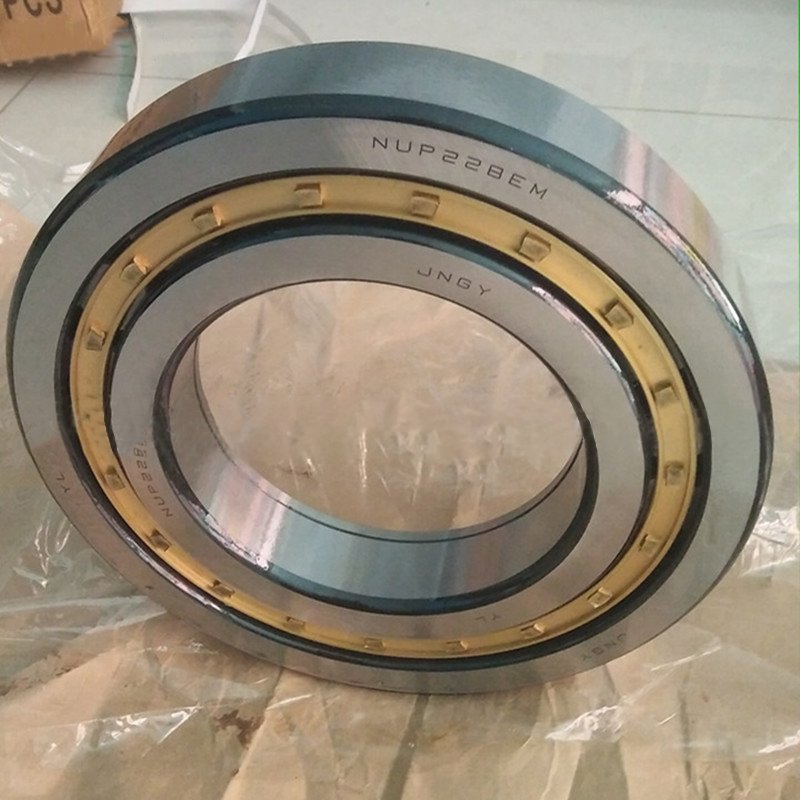


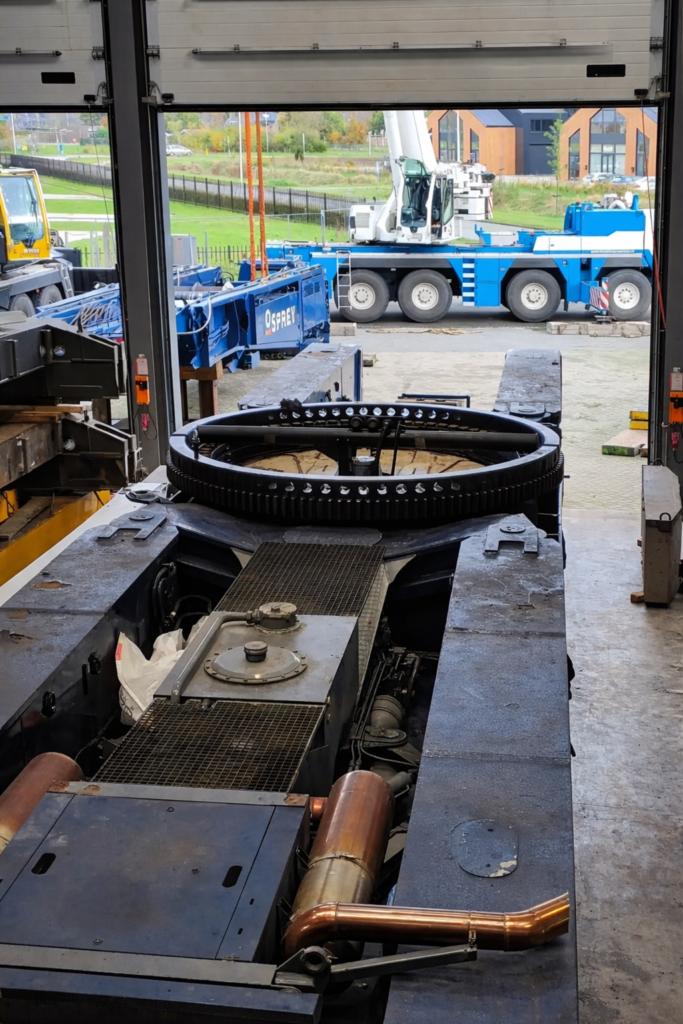
The installation of a slewing ring directly affects its rotational accuracy, performance, reliability, and stability, which in turn directly impacts the operation and service life of the entire equipment.
After-sales service engineers explain the installation requirements and debugging techniques for slewing rings on port portal cranes:
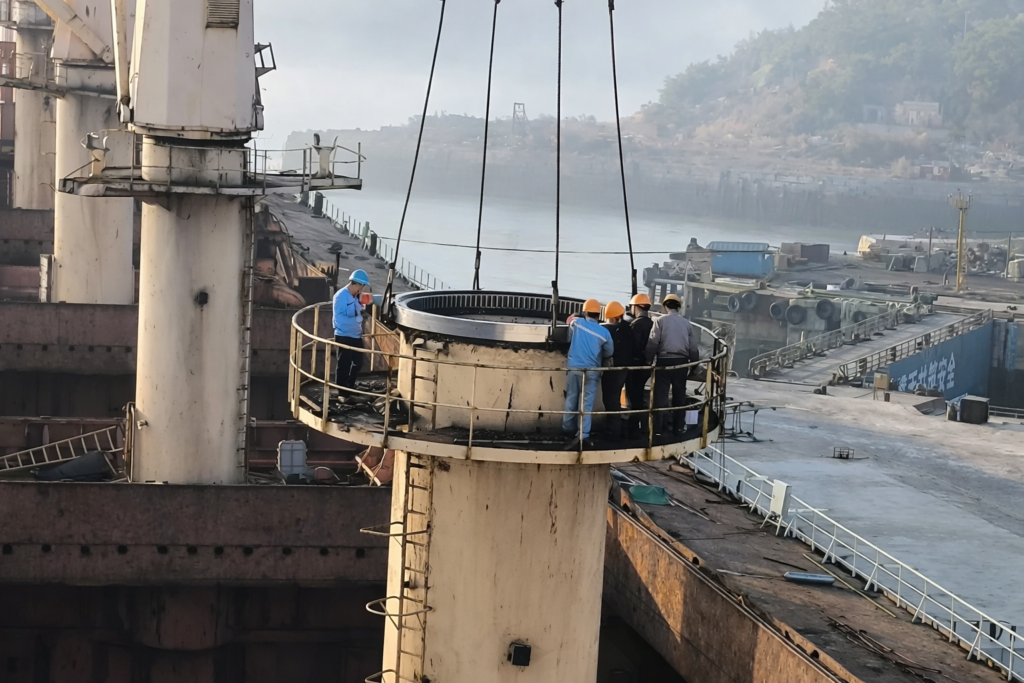
I. Requirements for the Mounting Base
(1) The mounting base for the slewing ring should undergo stress relief treatment after welding or casting processes. The mating mounting surface should be machined to remove burrs and debris. The mounting base must have sufficient rigidity and strength; generally, the flange connection surface thickness should not be less than 50mm.
(2) When the radial load exceeds 10% of the axial load, radial positioning should be provided.
(3) The flange mounting surface should be flat, dry, clean, and free of lubricants. For continuous surfaces that cannot be machined, injection molding methods should be used to ensure the accuracy of the mounting surface. If necessary, shim with copper sheets of varying thicknesses to level the surface.
II. Pre-Installation Preparations
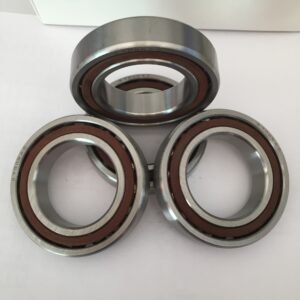
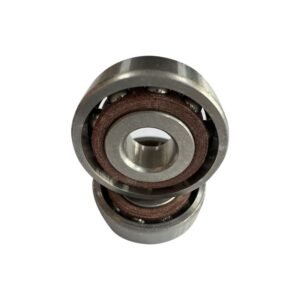
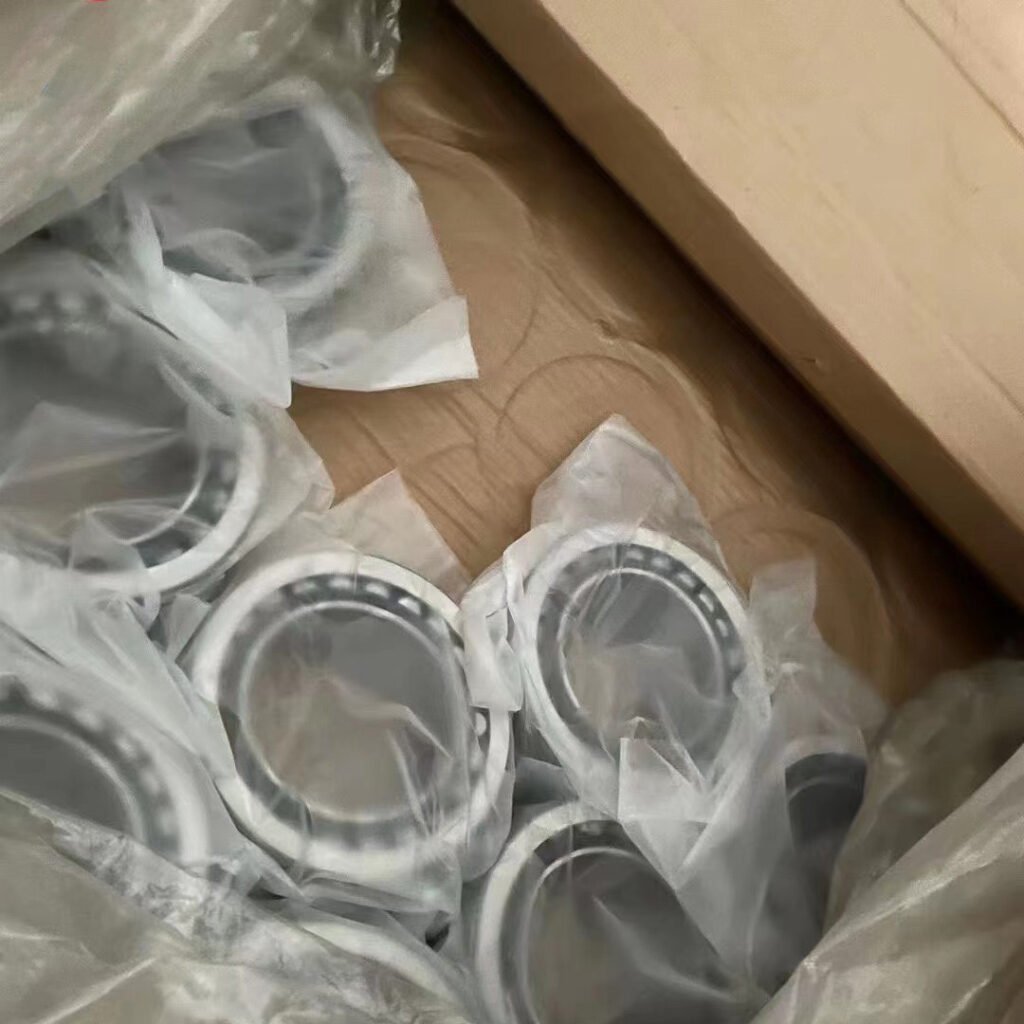
(1) Before installation, when unpacking the bearing, check if the bearing rotates freely. Inspect the seals for integrity; replace them if damaged.
(2) The淬火 soft zone of the slewing ring raceway (externally marked “S” or where the filling plug is located) should be positioned in a non-load-bearing area or an infrequently loaded area.
(3) Before tightening the installation bolts, check the gear meshing to ensure the backlash meets the gear accuracy requirements. The reference value is 0.03 to 0.05 times the module. The highest point of the gear is usually marked with three green paint strokes.
III. Connecting Bolts
(1) High-strength bolts should be used for connecting the slewing ring. Select the appropriate strength grade based on the load conditions; the strength grade should not be lower than the specified Grade 8.8. Grade 10.9 high-strength bolts are typically used by default. Nuts should have a strength grade matching the bolts, and their mechanical properties must comply with regulations.
(2) When installing bolts, tempered flat washers can be used. The use of spring lock washers is prohibited.
(3) After radial positioning of the slewing ring, tighten the bolts crosswise using a torque wrench. Simultaneously, check the bearing’s free rotation status. When tightening the bolts, sufficient preload must be applied. The preload should be 60%-70% of the bolt material’s yield strength. The bolt preload should comply with the specified reference values.
IV. Lubrication and Maintenance
(1) The slewing ring raceway is coated with a small amount of grease ex-factory. Before use, based on specific working conditions, refill with new grease.
(2) Slewing rings should be lubricated regularly with grease at intervals of 50-100 hours. In special working environments (tropical, high humidity, dusty, large temperature variations) or during continuous operation, the lubrication interval should be shortened. Ample new grease must also be applied before and after prolonged machine shutdown. During each lubrication, fill the raceway with grease until it seeps out from the seals. Rotate the slewing ring slowly while lubricating to ensure even distribution of grease.
(3) The gear teeth should be frequently cleaned of debris and coated with the appropriate grease.
(4) Check the bolt preload after the first 100 hours of operation. Subsequently, check it every 500 hours of operation. Maintain sufficient preload at all times.
(5) Pay attention to the operating condition of the slewing ring during use. If noise, impact, or a sudden increase in power consumption occurs, stop the machine immediately for inspection, troubleshoot, and disassemble for inspection if necessary.
(6) Frequently inspect the condition of the seals. If the seal strip is damaged, replace it promptly. If it is detached, reposition it immediately.