
A Pre-Purchase Guide for Bearing Importers, Distributors, and Procurement Professionals
As a bearing manufacturer, I have spoken with buyers who contacted us only after a counterfeit or substandard bearing order had already caused serious losses.
Some had received imitation bearings carrying the name of a well-known international brand. Others had purchased refurbished bearings presented as new products. Some received ordinary bearings that had been relabeled as P5 precision, C3 clearance, stainless steel, high-temperature, or premium-grade products.
By the time they discovered the problem, the money had already been paid. The goods had crossed borders, import duties and freight charges had been incurred, and the supplier had begun avoiding responsibility.

That is why I believe the most important word in the title “How to Avoid Fake Bearings” is not “fake.” It is “avoid.”
The safest strategy is not to wait until the bearings arrive and then try to prove that they are counterfeit. The real objective is to recognize suspicious products, risky sales channels, and unreliable suppliers before placing the order.
Modern counterfeit bearings can be difficult to identify from appearance alone. Packaging, labels, trademarks, laser markings, barcodes, and even authorization documents can be copied. NSK explicitly warns that fake bearings may look so similar to genuine bearings that buyers cannot always distinguish them visually, while SKF states that sourcing through authorized distributors is the most reliable way to protect product authenticity. (SKF)
In this guide, I will explain how I would evaluate a bearing offer before buying, where genuine bearings should be sourced, what markings buyers should examine, how to verify a supplier, why country of origin can be misunderstood, and which bearing brands procurement professionals should know.
1. How to Identify Fake and Low-Quality Bearings Before Buying
The first challenge is understanding what a “fake bearing” actually is.
Many buyers imagine a fake bearing as a poorly made product with an obviously misspelled logo. In reality, counterfeit and misrepresented bearings appear in several forms.
A counterfeit bearing may be fake in more than one way
The most obvious type is an unauthorized bearing marked with the trademark of a well-known manufacturer. A generic bearing may be laser-marked with SKF, FAG, NSK, NTN, Timken, or another recognized brand and then placed in copied packaging.
However, a bearing can also be misrepresented without using a famous trademark. Common examples include:
- Used bearings cleaned, polished, and repackaged as new;
- Standard-precision bearings sold as P5 or P4 products;
- Normal-clearance bearings relabeled as C3 or C4;
- Ordinary bearing steel described as stainless steel or high-temperature steel;
- Standard grease presented as food-grade or high-temperature lubricant;
- Low-cost bearings sold as products from Germany, Japan, Sweden, or the United States;
- Mixed inventory from different sources sold as one traceable batch;
- Rejected or second-grade bearings presented as first-grade products;
- Legal OEM bearings falsely described as products from a premium international brand.
From a purchasing perspective, all these situations create the same problem: the product delivered is not the product represented in the quotation.
Before evaluating photographs, buyers should therefore ask:
What exactly is the seller claiming this bearing to be, and what evidence supports each claim?
The claimed brand, model, precision, clearance, material, grease, origin, condition, and production batch should all be treated as separate claims requiring verification.
Do not rely on catalog pictures or marketplace images
Before placing an order, ask the supplier for current photographs and videos of the exact model being offered.
Generic catalog images prove nothing. Marketplace sellers can download photographs from the manufacturer’s website, another distributor, a customer, or a competitor.
I recommend requesting:
- A clear photograph of the complete bearing;
- Close-up images of the markings on both rings;
- A photograph of the individual box label;
- A photograph of the outer carton label;
- A continuous video showing the box being opened and the bearing being removed;
- A video showing several pieces from the offered batch;
- A photograph containing a code, company name, or date specified by the buyer;
- A video showing the actual quantity claimed to be in stock.
A customized photograph is much harder to reuse than a standard product image. For example, ask the supplier to place a handwritten card beside the bearing showing your company name, the current date, and a random code such as “RFQ-527.”
This still does not guarantee authenticity, but it helps determine whether the seller physically possesses the product being offered.
Verify the complete designation, not only the basic bearing number
Counterfeiters often copy familiar basic numbers such as 6205, 6308, 22220, or 30210. However, they may not fully understand the suffix system used by the original manufacturer.
A complete bearing designation may contain information about:
- Internal design;
- Seal or shield type;
- Cage material;
- Radial clearance;
- Precision class;
- Tapered bore;
- Heat stabilization;
- Lubrication;
- Snap-ring groove;
- Pairing arrangement;
- Special dimensional tolerances;
- Application-specific modifications.
NSK explains that basic bearing designations follow general ISO or JIS conventions, while supplementary designation codes may be unique to the manufacturer. This means two brands may use different suffixes for similar features, and a suffix that is valid for one brand may be meaningless or incorrect for another. (NSK全球网站)
Before ordering, check the full model against the brand’s official catalog or online product database.
Ask:
- Does this complete designation actually exist?
- Is the suffix combination technically valid?
- Does the supplier’s description match the suffix?
- Does the box label match the bearing marking?
- Does the quoted product match the requested cage, clearance, precision, and seal type?
- Is the seller using a competitor’s suffix system incorrectly?
A supplier who cannot explain the suffix may simply be unfamiliar with the product. But if the seller claims to be an official distributor while repeatedly providing incorrect designation information, that is a major warning sign.
Ask why the product is available
Availability can reveal more than packaging.
Suppose a supplier offers a rare, obsolete, large-size, or special-precision bearing with immediate delivery while every established channel quotes a long lead time. That does not automatically prove fraud, but it requires a convincing explanation.
Ask:
- When was the stock purchased?
- From which source?
- How many pieces are available?
- Are all pieces from the same batch?
- Why is a normally scarce model available immediately?
- Is the product discontinued inventory?
- Is it surplus stock from a canceled project?
- Is the original invoice or incoming record available?
- Has the packaging been replaced?
SKF lists bargain offers and unusually short lead times for special products among the warning signs buyers should investigate. (SKF Africa)
Be especially cautious when a seller claims to have every brand, every model, and every size in stock. No real distributor or manufacturer has unlimited inventory across the entire global bearing market.
Examine the commercial story, not only the bearing
Counterfeit offers often come with persuasive explanations:
- “Original factory surplus”;
- “OEM factory overproduction”;
- “Customs auction stock”;
- “Canceled government project”;
- “Same factory, without official packaging”;
- “Packaging damaged, but bearing is original”;
- “Made on the same production line”;
- “Distributor clearance below cost”;
- “No authorization, but 100% genuine.”
Some of these situations can legitimately occur. The problem is that they are also convenient stories for concealing untraceable stock.
As a manufacturer, I recommend one rule:
The more unusual the story, the stronger the evidence should be.
A legitimate surplus transaction should still have a traceable company, coherent quantity, reasonable production date, identifiable product batch, and commercial documents that explain the source.
Use price as a risk signal, not as final proof
A low price does not automatically mean a bearing is fake. Manufacturers, distributors, traders, and inventory holders have different operating costs and pricing structures.
However, when comparing offers, make sure you are comparing the same product:
- Same brand;
- Same complete model;
- Same country of origin;
- Same production condition;
- Same packaging;
- Same quantity;
- Same delivery term;
- Same authorization status;
- Same warranty and traceability;
- Same commercial responsibility.
An unauthorized seller’s price cannot be fairly compared with an authorized distributor’s price if the unauthorized seller cannot prove where the bearings came from.
If one quotation is dramatically lower than all credible alternatives, do not immediately ask how much more discount is available. First ask:
Which part of this offer is different?
The difference may be old stock, damaged packaging, parallel imports, a different origin, an incomplete designation, a non-authorized supply route, refurbished goods, or counterfeit products.
Compare answers from several suppliers
One of the best pre-purchase techniques is to submit the same RFQ to several carefully selected suppliers and compare more than price.
Compare:
- Interpretation of the model;
- Technical questions raised;
- Claimed origin;
- Availability;
- Lead time;
- Packaging;
- Product photographs;
- Weight;
- MOQ;
- Authorization status;
- Proposed alternatives;
- Payment terms.
If four suppliers explain that a model requires 10–14 weeks of production, but one unknown seller claims to have hundreds of pieces ready for immediate shipment at half the price, that inconsistency deserves investigation.
Reliable suppliers do not always provide identical answers, but their answers should generally follow industrial and commercial logic.
2. What Identifying Marks Should Genuine Bearings Have?
Buyers frequently ask us whether genuine bearings can be identified by the quality of the laser marking.
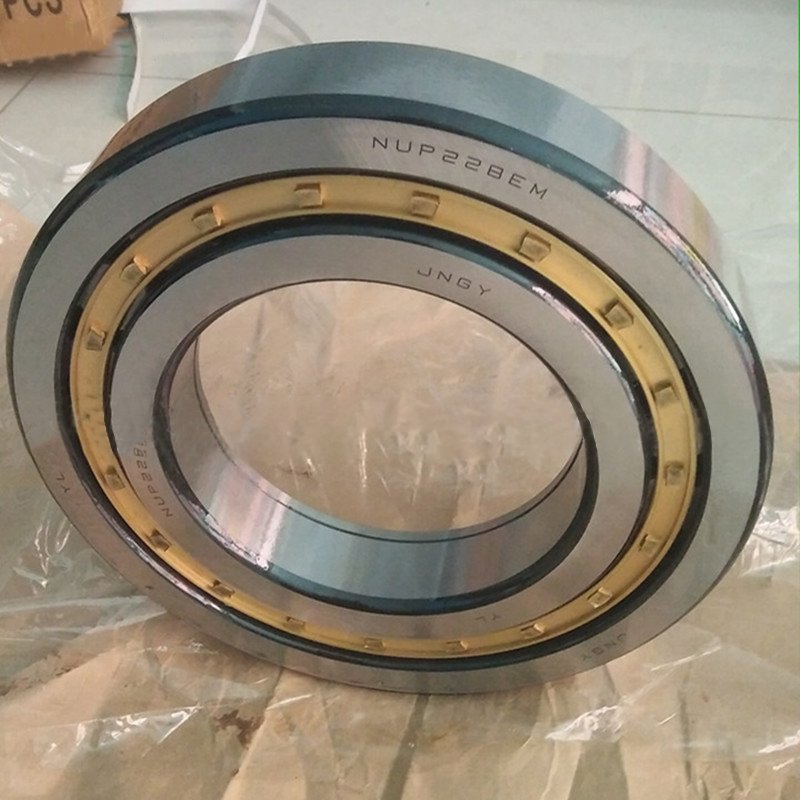
Markings are useful, but there is no universal rule stating that deep markings are genuine and shallow markings are fake. Different brands, factories, bearing sizes, production years, and marking technologies can produce different appearances.
The correct approach is not to judge one visual feature. It is to verify whether all identifying information is internally consistent.
Typical information on a genuine bearing
Depending on the manufacturer and product type, the bearing itself may show:
- Manufacturer’s brand or trademark;
- Basic designation;
- Complete designation or selected suffixes;
- Clearance designation;
- Precision class;
- Country of origin;
- Factory code;
- Batch or date code;
- Matching number for paired bearings;
- Special production or application code.
Some small bearings have limited space and may carry less information. Larger or precision bearings may have more detailed identification.
The absence of markings can be an obvious warning sign when the genuine product should normally be marked. NSK also advises buyers to check whether markings resemble the manufacturer’s normal style and whether they appear in the usual location. (NSK全球网站)
However, correct-looking markings alone do not prove authenticity. Modern laser engraving equipment can reproduce a logo, model number, and country name with high visual accuracy.
Cross-check the bearing, box, carton, and quotation
Before ordering, ask the supplier to show the following information in one continuous set of photographs or video:
- Bearing marking;
- Individual box label;
- Outer carton label;
- Supplier quotation;
- Stock quantity;
- Batch or date code.
The information should correspond.
Watch for inconsistencies such as:
- The box states C3, but the bearing does not;
- The quotation includes 2RS, but the photographed bearing has metal shields;
- The bearing has a brass cage, while the designation indicates another cage;
- The label shows one country, while the product is marked with another;
- Different boxes in the same batch show unrelated date codes;
- The basic model is correct, but the suffix differs;
- The seller avoids showing the bearing after presenting the box.
A genuine box containing a counterfeit bearing is still a counterfeit transaction. Packaging must never be evaluated separately from the product and the supply route.
Treat QR codes and barcodes as verification tools, not decoration
Some manufacturers use digital authentication or traceability systems. NSK, for example, provides the NSK Verify application for supported products with qualifying 2D codes, while the World Bearing Association promotes an application designed to help users check participating manufacturers’ products. (WBA – Stop fake bearings)
When an official verification system applies to the product, use only the manufacturer’s official application or platform.
Do not rely on the fact that a QR code opens a website. Counterfeiters can print codes leading to copied pages, unrelated pages, or even genuine public product pages.
A valid verification process should establish a meaningful connection between:
- The scanned code;
- The specific product;
- Its model;
- Its packaging;
- Its batch;
- The brand’s own database.
Also remember that not every genuine bearing has a scannable anti-counterfeit code. The absence of a code is not automatically evidence of a fake unless that specific product line is officially required to have one.
Country-of-origin markings require context
A buyer may reject a genuine product because it was manufactured outside the brand’s home country, or accept a counterfeit product simply because it says “Made in Germany” or “Japan.”
Both conclusions can be wrong.
Large bearing groups operate international production networks. Therefore:
- A Swedish brand may manufacture outside Sweden;
- A German brand may manufacture outside Germany;
- A Japanese brand may manufacture outside Japan;
- An American brand may manufacture outside the United States.
Country of origin is one part of the product identity, but it must be evaluated together with the model, factory network, batch information, and authorized supply route.
A printed country name is easy to copy. A traceable supply chain is much harder to imitate.
3. Where Can You Buy Genuine Bearings?
When buying a specified premium brand, the safest approach is to begin with the brand owner—not with a general search engine advertisement or the lowest marketplace listing.
Buy directly from the bearing brand when practical
For large projects, strategic accounts, OEM programs, or high-value products, buyers may be able to purchase directly from the brand’s national sales company or regional organization.
Even when direct purchasing is unavailable, the brand can often guide buyers toward an appropriate official sales channel.
SKF and NSK both advise buyers to source their products from authorized distributors. SKF provides an official distributor finder, while NSK publishes its authorized distributor network and states that authorized distributors will not supply counterfeit NSK products. (SKF)
Use distributors verified through the brand’s official website
Do not accept an authorization certificate at face value.
Certificates can be:
- Expired;
- Altered;
- Copied from another company;
- Limited to a different region;
- Limited to a particular product range;
- Issued to an affiliated company rather than the seller;
- Fabricated entirely.
Verify authorization using the brand’s official website or official regional office.
Confirm:
- The distributor’s exact legal name;
- Office location;
- Authorized territory;
- Relevant brand;
- Current authorization status;
- Whether the email domain and telephone number correspond;
- Whether the invoicing company is the authorized company.
A distributor may be authorized for one brand but not for every brand shown on its website. Authorization for SKF, for example, does not prove authorization for NSK, FAG, NTN, or Timken.
Established industrial distributors can be reliable sources
A reputable independent industrial distributor may be a suitable source, particularly when it can demonstrate a consistent, traceable procurement route.
Look for:
- Long operating history;
- Permanent warehouse;
- Professional technical staff;
- Formal quotations and tax invoices;
- Clear product-return policy;
- Recognizable industrial customers;
- Stable business address;
- Corporate bank account;
- Transparent upstream source;
- Willingness to accept authenticity obligations.
The word “independent” does not mean “unreliable.” The real question is whether the distributor can prove how it obtains genuine products.
For critical branded bearings, however, an authorized source remains the lower-risk option.
Purchase OEM and private-label bearings from real manufacturers
Not every buyer needs an international premium brand.
Importers and distributors may need:
- Private-label bearings;
- OEM bearings;
- Custom dimensions;
- Special materials;
- Small production batches;
- Non-standard cages;
- Special clearance;
- Application-specific lubrication;
- Large slewing bearings;
- Precision thin-section bearings.
In these cases, purchasing directly from a competent bearing manufacturer can be appropriate.
However, buyers must distinguish between a legal OEM manufacturer and a counterfeiter.
A legitimate OEM manufacturer should be willing to produce under:
- Its own trademark;
- The buyer’s legally owned brand;
- A neutral, unbranded specification;
- A contractually authorized mark.
It should not offer to print an unrelated international brand on the bearing simply because the buyer requests it.
When a factory says, “We can mark any famous brand you want,” that is not flexibility. It is a serious compliance and authenticity warning.
Use B2B platforms only to create a supplier shortlist
B2B marketplaces can help locate manufacturers and exporters. They should not be treated as proof of authenticity.
A platform badge may indicate that certain company records have been checked, but it does not establish that every bearing offered is genuine, correctly specified, or legally sourced.
Use the platform to:
- Discover candidate suppliers;
- Compare product categories;
- Initiate communication;
- Review company history;
- Obtain basic documentation.
Then complete independent due diligence before ordering.
Do not assume that a “verified supplier,” “gold supplier,” or long-established account is an authorized distributor for the brands shown in its listings.
Avoid anonymous and untraceable sales channels
The highest-risk sources are usually those that cannot be held commercially accountable.
Examples include:
- Social media sellers without a registered company;
- Personal bank accounts;
- Sellers operating only through messaging applications;
- Websites without a legal company name;
- Newly registered domains offering many premium brands;
- Suppliers refusing video calls;
- Companies that continually change email addresses;
- Sellers whose invoice, bank account, and website use different company names;
- Traders unwilling to disclose whether the product is authorized, parallel-imported, surplus, or OEM.
The lower price may look attractive, but the buyer may have no realistic recovery route if the product is fraudulent.
4. How to Verify a Bearing Supplier Before Cooperation
Before issuing a purchase order, I recommend verifying four different aspects of the supplier:
- Legal identity;
- Claimed business role;
- Product access;
- Technical competence.
A supplier can be a legally registered company and still sell counterfeit goods. A real factory can manufacture one bearing category while falsely claiming to produce everything. A knowledgeable salesperson can still offer untraceable inventory.
Verification must therefore combine several forms of evidence.
Confirm the supplier’s legal identity
Check whether the following details are consistent:
- Registered company name;
- Business registration number;
- Registered address;
- Operating address;
- Website;
- Corporate email;
- Telephone number;
- Quotation header;
- Contracting party;
- Invoice issuer;
- Beneficiary bank account;
- Exporting entity.
Ask for clarification when several companies are involved.
There may be legitimate reasons. A factory may use a related export company, or a corporate group may invoice through a regional subsidiary. However, the relationship should be documented and understandable.
Do not send payment when:
- The contract is with one company but payment goes to an unrelated personal account;
- The authorization belongs to another company;
- The supplier refuses to explain its corporate structure;
- The beneficiary name changes shortly before payment;
- A newly introduced “finance agent” requests the funds.
Determine whether the company is a manufacturer, distributor, or trader
All three business models can be legitimate.
The risk arises when the supplier misrepresents its role.
A manufacturer should be able to demonstrate production capability relevant to the quoted product.
A distributor should be able to explain its brands, territory, warehouse, and procurement channels.
A trader should be transparent about sourcing from third-party factories or distributors.
Ask directly:
- Do you manufacture this model?
- Is it produced in your own plant?
- Are you an authorized distributor?
- Which brand has authorized you?
- Is this parallel-imported stock?
- Is the bearing supplied under your own brand?
- Who will appear as the manufacturer on the product and packaging?
- Which company will issue the invoice?
- Who is legally responsible for authenticity?
The answer “We are both factory and agent for all major brands” requires careful verification. It is commercially unusual for one ordinary supplier to manufacture its own complete bearing range while also holding authorization from numerous competing global brands.
Arrange a live video verification
A polished factory video may have been produced years ago or copied from another company.
Arrange a live call and ask the supplier to show:
- Company entrance;
- Office signage;
- Business license;
- Warehouse;
- Requested model;
- Current inventory;
- Packaging;
- Production area;
- Relevant machines;
- Inspection area;
- Employees;
- A buyer-specified handwritten code.
For a manufacturer, do not merely ask to see machines. Ask to see machines relevant to the product.
A factory quoting small deep-groove ball bearings should demonstrate capabilities different from a factory quoting a 3,000 mm slewing bearing. A plant showing only assembly tables cannot prove that it controls forging, turning, heat treatment, grinding, or raceway finishing.
The supplier does not necessarily need to perform every process in-house, but it should accurately explain which operations are internal and which are outsourced.
Ask questions that reveal genuine product knowledge
Do not turn the conversation into an examination. Ask questions connected to the actual application.
For example:
- What does the suffix mean?
- Which cage is used?
- What is the standard clearance?
- Is the quoted product suitable for the stated temperature?
- What grease is normally supplied?
- Is this bearing open, shielded, or sealed?
- Is the bore cylindrical or tapered?
- Is the product paired or universal-matching?
- Is the stated precision available as standard?
- Why is the lead time so short?
- What is the approximate unit weight?
- Is the model still in production?
- Is there a current replacement designation?
A reliable supplier may not answer every question immediately. In fact, a professional manufacturer or distributor will sometimes say:
“We need to confirm this point with engineering or check the production record.”
That is not a weakness. Precision is more credible than instant agreement.
Be cautious when every technical request receives the same answer:
“No problem. We can do everything.”
Investigate the company’s digital history
Search the company name together with terms such as:
- Counterfeit;
- Fake bearing;
- Fraud;
- Complaint;
- Scam;
- Lawsuit;
- Trademark;
- Customer review.
Also examine:
- Domain registration age;
- Archived versions of the website;
- LinkedIn company history;
- Employee profiles;
- Trade show participation;
- Industry association membership;
- Import-export records where legally accessible;
- Address consistency;
- Telephone number history.
A recently created website does not automatically indicate fraud. A long-established website does not guarantee honesty. Digital history is one piece of the due-diligence process.
Check whether the quotation makes commercial sense
A professional quotation should clearly identify:
- Brand;
- Full model;
- Quantity;
- Unit price;
- Origin, when relevant;
- Lead time;
- Packaging;
- Delivery term;
- Payment term;
- Quotation validity;
- Warranty or authenticity commitment;
- Seller’s legal entity.
Vague descriptions such as “original bearing,” “Germany quality,” “Japan technology,” or “SKF equivalent original” can be misleading.
“SKF equivalent” does not mean SKF.
“German technology” does not mean made in Germany.
“OEM quality” does not mean produced by the original brand.
“Original package” does not prove that the bearing inside is original.
Ask the supplier to use precise, legally meaningful language.
5. Where Are the World’s Major Bearing Brands Manufactured?
Brand origin and manufacturing origin are not always the same.
This distinction is essential because counterfeit sellers often exploit the buyer’s assumptions about geography.
SKF
SKF was founded in Gothenburg, Sweden, in 1907. It is now a global group represented across approximately 130 countries and supported by a large international distributor network. Its products and operations are not limited to Sweden. (SKF)
Therefore, an SKF bearing manufactured outside Sweden is not automatically counterfeit. Conversely, a bearing marked “Made in Sweden” is not automatically genuine.
The safest verification remains the sales channel and the brand’s authentication process.
FAG and INA under Schaeffler
FAG and INA are major bearing brands within the Germany-based Schaeffler Group. Schaeffler operates a global production network across Europe, the Americas, and Asia-Pacific rather than manufacturing exclusively in Germany. Its recent corporate reporting describes production and research operations across multiple regions and countries. (舍弗勒)
A genuine FAG or INA product may therefore originate outside Germany, depending on product line, plant allocation, market, and production period.
NSK
NSK is a Japanese bearing manufacturer with a history dating to its bearing production in Japan in 1916. It subsequently developed manufacturing, sales, and research operations throughout Japan, the Americas, Europe, and Asia. (NSK全球网站)
Buyers should not assume that every genuine NSK product must be marked Japan. They should verify whether the stated origin is consistent with NSK’s production network and the specific product series.
NTN
NTN was founded in Japan in 1918 and now operates an international manufacturing and sales network. Its official production listings include plants in countries such as Japan, the United States, India, Indonesia, and other locations. (NTN Global)
The same principle applies: a non-Japanese NTN bearing is not automatically fake, but its source should still be traceable.
Other international brands
Timken, NACHI, JTEKT-related bearing businesses, and other global manufacturers also operate across multiple countries and product divisions.
Production networks can change through acquisitions, plant investments, corporate restructuring, and product-line transfers. Buyers should therefore avoid relying on static lists copied from old blogs or marketplace descriptions.
For a high-value order, verify the current information through:
- The brand’s official website;
- Its regional sales company;
- Its authorized distributor;
- Current product documentation;
- Official authentication channels.
The key lesson is simple:
A brand’s home country tells you where the company originated. It does not tell you where every bearing carrying that brand must be manufactured.
6. Bearing Brands Every Buyer Should Know
Understanding the bearing market helps buyers avoid two opposite mistakes.
The first is assuming that only a few famous brands can make good bearings.
The second is accepting an unknown product simply because a seller describes it as a “German brand,” “Japanese standard,” or “European technology.”
Global bearing groups
Procurement professionals commonly encounter major international groups such as:
- SKF;
- Schaeffler, including FAG and INA;
- NSK;
- NTN;
- JTEKT-related bearing brands;
- Timken;
- NACHI.
These companies have broad product portfolios, established engineering systems, global distribution networks, and strong brand recognition.
Their visibility also makes them attractive targets for counterfeiters.
When buying one of these brands, brand recognition is not enough. Verify the seller’s right to supply it.
Specialized bearing brands
Many respected manufacturers focus on particular applications rather than trying to serve every industry.
Depending on the application, buyers may encounter specialists in:
- Super-precision spindle bearings;
- Needle roller bearings;
- Thin-section bearings;
- Slewing bearings;
- Linear motion products;
- Aerospace bearings;
- Stainless steel bearings;
- Ceramic bearings;
- High-temperature bearings;
- Food-processing bearings;
- Split bearings;
- Large rolling-mill bearings.
A specialist brand may be less familiar to a general buyer while still offering excellent technical capability within its field.
Do not classify a bearing as fake merely because the brand is unfamiliar. First verify whether:
- The company legally exists;
- It owns or is authorized to use the trademark;
- It has a credible manufacturing or sourcing operation;
- Its product specifications are transparent;
- Its market history can be confirmed;
- It sells under its own identity rather than copying another brand.
Established Chinese and emerging-market manufacturers
China has one of the world’s largest bearing manufacturing ecosystems. It includes large industrial groups, specialized factories, export-oriented OEM manufacturers, and small workshops with widely differing capabilities.
The same is true, on different scales, in India, South Korea, Turkey, Eastern Europe, and other manufacturing regions.
A Chinese-made bearing is not inherently counterfeit.
A legally produced Chinese bearing carrying the manufacturer’s own brand or the buyer’s authorized private label can be a legitimate product.
The decisive distinction is:
- Own-brand or authorized OEM production: legitimate;
- Unauthorized use of another company’s trademark: counterfeit.
As a manufacturer, I would rather see a supplier honestly state, “This is our own brand, produced to this specification,” than falsely claim, “This is an original premium-brand bearing from a secret factory channel.”
Honest origin and measurable specifications are more valuable than a famous logo with no traceable source.
Be careful with invented “European” or “Japanese” brands
Some bearing brands are intentionally presented with European- or Japanese-sounding names even though the company has no meaningful operation in the claimed country.
Before accepting claims such as “German brand” or “Japanese brand,” investigate:
- Where the trademark is registered;
- Where the company is incorporated;
- Where the actual factory is located;
- Whether the address is an office, warehouse, virtual office, or residence;
- Whether the company has employees in the claimed country;
- Whether official product documentation identifies the manufacturer;
- Whether the seller is describing brand origin, technology origin, or manufacturing origin.
A trademark registered in Germany does not necessarily mean the bearings are manufactured there.
A European sales office does not prove European production.
A Japanese-style name does not prove Japanese ownership or manufacturing.
Precise language protects buyers from misleading positioning.
7. Pre-Order Anti-Counterfeit Checklist for Bearing Buyers
Before issuing the purchase order or transferring payment, I recommend completing the following checklist.
Product identity
- Is the required brand clearly stated?
- Is the full bearing designation correct?
- Does the suffix exist in the brand’s official catalog?
- Do the quoted specifications match the designation?
- Has the supplier confirmed the cage, clearance, precision, seal, and origin?
- Have I received current photographs of the exact product?
- Have I seen the bearing marking and packaging label together?
- Are the product, box, carton, and quotation consistent?
- Is the production or stock story commercially reasonable?
Sales channel
- Did I find the supplier through the brand’s official network?
- If authorization is claimed, have I verified it independently?
- Does the authorization cover the correct brand and region?
- Is the supplier purchasing from a traceable upstream source?
- Is this an authorized, independent, parallel-import, surplus, OEM, or private-label offer?
- Has the supplier described the channel accurately?
Supplier identity
- Is the company legally registered?
- Do the quotation, contract, invoice, and bank account use consistent company names?
- Is the company address verifiable?
- Does the website show a real operating business?
- Does the corporate email domain belong to the company?
- Has the supplier agreed to a live video call?
- Have I seen the relevant warehouse or factory?
- Does the company’s claimed role match what it can demonstrate?
Commercial logic
- Is the price reasonably aligned with other credible offers?
- If the price is unusually low, has the difference been explained?
- Is the claimed inventory believable?
- Is the lead time realistic?
- Is the seller pressuring me to pay before verification?
- Does the quotation use precise product language?
- Is the supplier willing to accept written authenticity obligations?
- Is payment being requested into a company account?
- Are sudden changes to bank details being independently confirmed?
Final decision
- Have all major inconsistencies been resolved?
- Can the supplier explain the product’s source?
- Would the brand owner recognize this sales route as legitimate?
- Am I buying the product specification—or merely trusting the packaging?
- Would I still approve the supplier without the unusually low price?
- Is the first order small enough to control risk?
- Is there any unanswered question that could become a dispute after payment?
My practical rule is:
One serious inconsistency is enough to delay an order. Several unexplained inconsistencies are enough to reject the supplier.
Final Thoughts from a Bearing Manufacturer
The counterfeit bearing problem cannot be solved by memorizing one packaging color, one logo shape, or one laser-marking style.
Counterfeiters copy visible features. They can reproduce boxes, labels, barcodes, certificates, and country-of-origin markings.
What is much harder to reproduce is an entirely consistent business chain:
- A real company;
- A verifiable role;
- A legitimate product source;
- Correct technical knowledge;
- Coherent pricing;
- Realistic inventory;
- Matching product information;
- Traceable documentation;
- A corporate payment path;
- Willingness to accept responsibility.
That is why the most effective way to avoid fake bearings is to evaluate the product, supplier, sales channel, and commercial logic together before placing the order.
When buying premium international brands, begin with the brand’s official organization or authorized distribution network. Both SKF and NSK emphasize authorized channels as the most reliable protection against counterfeit products, while the World Bearing Association also provides anti-counterfeit resources for buyers. (SKF)
When buying OEM, private-label, or custom bearings, work with a real manufacturer that is honest about what it produces and whose product identity, technical capability, and company information can be verified.
The right time to prevent a counterfeit bearing purchase is not when the shipment arrives.
It is before the purchase order is issued.
It is before the deposit is transferred.
And it is before an attractive price persuades you to ignore an unexplained risk.