
As a bearing application engineer with years of hands-on experience in failure analysis, OEM consultations, and field diagnostics, I often get asked questions like this:
“Can I buy used ball bearings from Alibaba to save costs?”
At first glance, the idea may seem attractive. After all, Alibaba is a global sourcing hub, and ball bearings are simple in design and widely used. But as someone who’s studied the micro-failures that bring down million-dollar machines, I can tell you: the issue isn’t just about the price—it’s about risk, reliability, and what you really get when buying used bearings online.
Are Used Ball Bearings Economically Viable?
Yes, they may be—in very limited cases.
Used ball bearings can be economical for non-critical applications where failure has minimal consequences. For example, educational demos, light-duty mechanical prototypes, or very low-speed, low-load environments.
However, in real-world industrial or mechanical equipment, ball bearings play a mission-critical role. A single bearing failure can cause costly downtime, damage adjacent parts, or even lead to catastrophic safety issues. In such environments, the minor savings from buying a used bearing are usually wiped out many times over by maintenance costs, downtime, or early failure.
Risks of Buying Used Bearings from Alibaba
Alibaba is a vast marketplace, connecting thousands of suppliers globally. However, it’s not uncommon to find listings where:
- Bearings are labeled as “surplus,” “reconditioned,” or “refurbished”—but without verified service history.
- There’s no official inspection record or quality certificate.
- Sellers re-label lower-spec bearings or polish surfaces to make the items look new.
- Packaging may look professional, but the bearing’s internal tolerances are outside of operational standards.
- Sellers generally do not provide a warranty on used bearings.
Without proper testing equipment and background data, even I wouldn’t trust a used bearing I didn’t personally inspect or recondition. Buying such components for industrial use—especially via a third-party e-commerce platform—is an extremely risky move.
How Do You Determine if a Used Bearing is Reusable?
Reusing a ball bearing isn’t as simple as checking for rotation. It requires a multi-point inspection process, often carried out in certified labs or by trained professionals.
Here are key criteria:
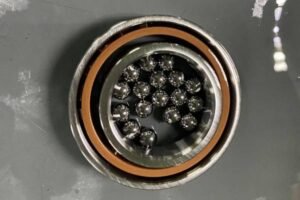
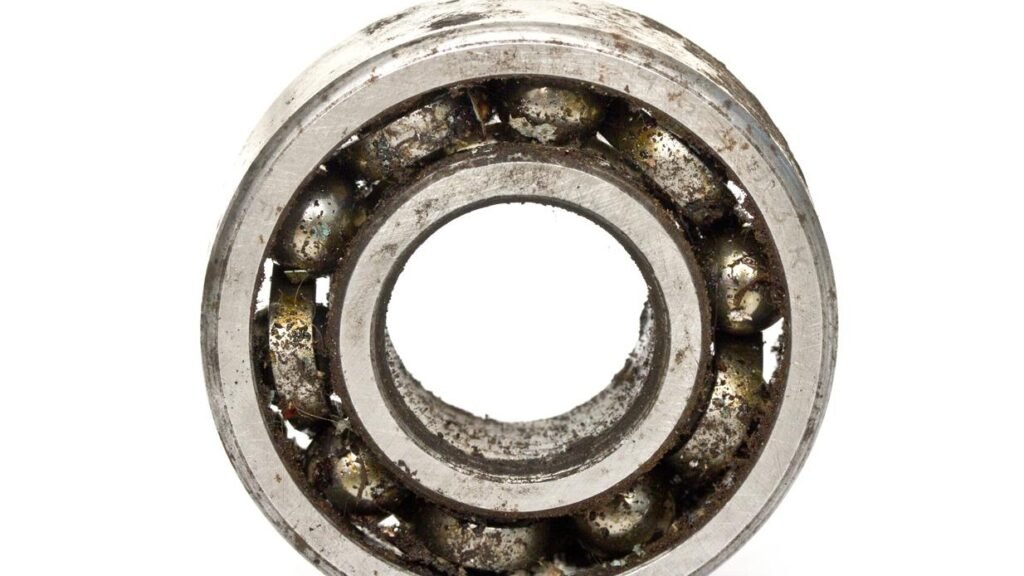
- Visual Inspection: Look for wear marks, pitting, corrosion, or surface damage on the raceways and balls.
- Dimensional Accuracy: Use precision instruments to check bore and outer diameters, roundness, and clearance values.
- Noise and Vibration Testing: Specialized equipment detects abnormal vibration frequencies that indicate fatigue or internal damage.
- Lubrication Condition: Check if the lubricant is contaminated, aged, or dried out.
- Seal Integrity: For sealed bearings, compromised seals mean contamination risk.
- Load History and Run Time: Bearings previously used in high-speed, high-load, or high-temperature conditions usually should not be reused—even if they “look fine.”
Unless all these checks are passed—and documented—a used bearing should not be put back into operation.
Are Used Ball Bearings on Alibaba Trustworthy?
In most cases, no.
There are reputable suppliers on Alibaba, but used bearings represent a unique challenge:
- There’s no universal quality assurance for used parts across sellers.
- Listings rarely include complete service life history.
- Many “used” bearings are sold without any reconditioning, or worse, are counterfeit.
- Some are removed from scrapped machinery and superficially cleaned to look sellable.
Unless the seller is a known and certified reconditioner—offering documentation, traceability, and testing reports—there’s no reliable way to verify the bearing’s integrity before it arrives in your hands.
Conclusion: My Professional Advice
As a bearing engineer, I strongly advise against sourcing used ball bearings from Alibaba for any application that involves speed, load, or reliability. The cost of a new, certified bearing is often negligible compared to the risk posed by a reused or misrepresented one.
If you’re truly looking to reduce bearing costs:
- Consider reliable, cost-effective brands with solid QC systems.
- Work with suppliers that offer volume pricing, factory direct sales, or OEM options.
- Invest in bearing condition monitoring tools instead of taking chances with unknown used stock.
Remember, bearings may be small—but in critical equipment, they carry the weight of your entire operation.
If you are at a loss as to whether to purchase new or used ball bearings, please contact me and I will give you specific analysis and guidance on your project.