Skip to content

Introduction
After working with customers from more than 50 countries, I have learned something that surprises many first-time buyers.
Most import problems are not caused by the bearings.
They are caused by missing or incorrect shipping documents.
Sometimes the bearings are manufactured perfectly.
Production finishes on time.
Quality inspection passes.
The shipment leaves our factory exactly as scheduled.
Then the cargo arrives at the destination port…
…and customs asks for one missing document.
The shipment stops.
Storage charges begin.
Delivery dates are missed.
Production lines wait for parts.
The buyer wonders why everything went wrong.
In many cases, the problem had nothing to do with product quality.
It was simply documentation.
Whenever a customer places an order with us, I spend almost as much time confirming the required shipping documents as I do confirming the bearing specifications.
Because every country has different customs requirements.
Some require a Certificate of Origin.
Some require fumigation certificates.
Some request quality certificates.
Others require preferential origin documents under free trade agreements.
If we prepare everything before shipment, customs clearance is usually smooth.
If we wait until the goods arrive, solving documentation problems becomes much more expensive.
In this guide, I’ll explain exactly which import documents buyers should request from their bearing supplier, why each document matters, and how to avoid the most common mistakes that delay customs clearance.
Table of Contents
- Why Import Documents Matter
- Commercial Invoice
- Packing List
- Bill of Lading / Air Waybill
- Certificate of Origin (COO)
- HS Code Information
- Quality Inspection Documents
- Material Certificates
- Heat Treatment Reports
- Dimensional Inspection Reports
- Packing & Marking Requirements
- Fumigation Certificate
- Insurance Documents
- CE, RoHS and Other Compliance Documents
- Export Declaration
- Which Documents Should You Request Before Shipment?
- Common Documentation Mistakes
- My Recommended Checklist
- FAQ
- Conclusion
1. Why Import Documents Matter
Many buyers think documentation is simply a formality.
I don’t agree.
Correct documents help determine:
- Customs clearance speed
- Import duties
- Tax calculation
- Country of origin
- Product identification
- Insurance claims
- Warranty support
- Future audits
One missing document can delay delivery for days—or even weeks.
2. Commercial Invoice
This is the most important document in the shipment.
Without it, customs cannot determine:
- Product description
- Customs value
- Country of origin
- HS Code
- Currency
- Quantity
- Incoterms
- Seller
- Buyer
A professional bearing invoice should include:
✔ Bearing model numbers
✔ Product description
Example:
Deep Groove Ball Bearing 6205-2RS
instead of
Bearing
Also include:
- HS Code
- Unit Price
- Total Value
- Currency
- Country of Origin
- Incoterms
- Gross / Net Weight
3. Packing List
The Packing List tells customs what is physically inside every package.
It normally contains:
- Carton numbers
- Wooden crate numbers
- Bearing models
- Quantity
- Net weight
- Gross weight
- Package dimensions
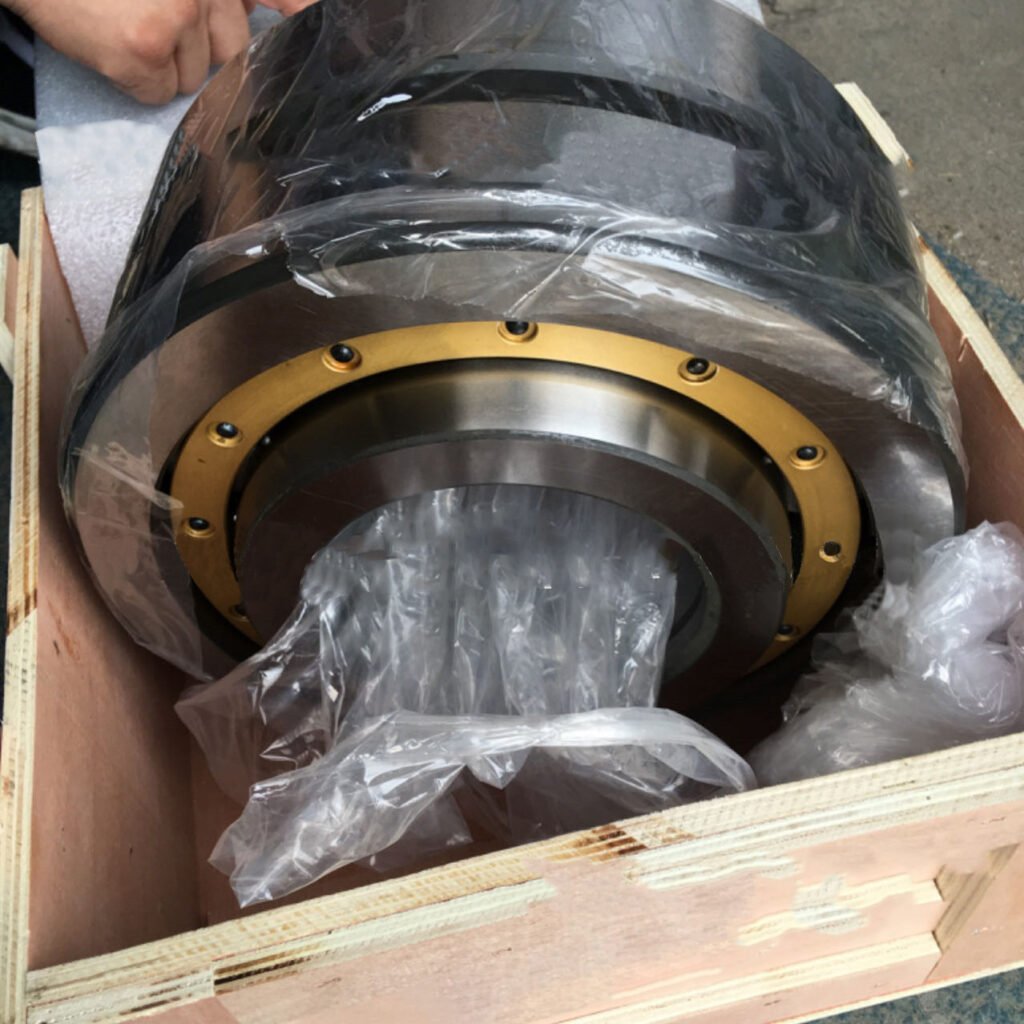
Large slewing bearings may also include:
- Lifting points
- Package orientation
- Center of gravity
4. Bill of Lading / Air Waybill
This is the transport document.
Depending on shipment:
Sea freight
→ Bill of Lading (B/L)
Air freight
→ Air Waybill (AWB)
Courier
→ Express Waybill
Without this document, buyers cannot normally collect the cargo.
5. Certificate of Origin (COO)
Many buyers ask me:
Do I really need a COO?
Sometimes yes.
Sometimes no.
It depends on:
- Import country
- Trade agreement
- Customs requirements
A COO proves:
Where the bearings were manufactured.
It may also determine:
- Preferential duty
- Free Trade Agreement benefits
- Anti-dumping rules
6. HS Code Information
I always recommend confirming the HS Code before shipment, not after arrival.
The supplier should provide:
- Suggested HS Code
- Product description
- Bearing type
The importer or customs broker should verify the final national tariff code.
In another article, I explain in detail how to look up the correct HS codes for bearings.
7. Quality Inspection Documents
Industrial customers often request:
- Inspection Report
- Final QC Report
- Acceptance Report
Typical inspection includes:
- Dimensions
- Noise
- Rotation
- Clearance
- Appearance
- Marking
8. Material Certificates
Many industrial projects require proof of material.
Examples:
GCr15
42CrMo
440C Stainless Steel
420 Stainless Steel
Ceramic
The certificate confirms the material actually used.
9. Heat Treatment Report
Large bearings often require:
- Raceway Hardness
- Surface Hardness
- Effective Hardening Depth
Especially for:
- Slewing Bearings
- Gear Rings
- Large Roller Bearings
10. Dimensional Inspection Report
For customized bearings, buyers may request:
- Bore
- Outside Diameter
- Width
- Raceway
- Runout
- Roundness
- Parallelism
11. Packing & Shipping Marks
The outer package should show:
- PO Number
- Carton Number
- Gross Weight
- Net Weight
- Country of Origin
- Customer Part Number
Large bearings also require lifting marks.
12. Fumigation Certificate
Required only when using:
Natural wooden packaging.
If ISPM 15 compliant plywood is used,
normally no fumigation certificate is required.
13. Insurance Certificate
Required when insurance is included under the agreed trade term or purchased separately.
The certificate helps buyers make claims if cargo is damaged during transportation.
14. Compliance Documents
Some customers request:
- CE Declaration
- RoHS
- REACH
- FDA (Food-grade bearings)
- ISO9001
Whether these apply depends on the product and destination market.
15. Export Declaration
Normally prepared by the exporter.
Some buyers request copies for:
- Accounting
- Audits
- Customs verification
16. Which Documents Do I Recommend Buyers Request?
For most bearing imports:
✅ Commercial Invoice
✅ Packing List
✅ Bill of Lading / AWB
✅ Certificate of Origin
✅ HS Code
For industrial bearings:
- Material Certificate
- Inspection Report
- Heat Treatment Report
For food-grade bearings:
- FDA-related compliance documentation (when applicable)
For large slewing bearings:
- UT Report
- Hardness Report
- Dimensional Report
17. Common Buyer Mistakes
I see these mistakes repeatedly.
Asking for documents after shipment
Prepare everything before departure.
Using vague descriptions
Don’t write:
Bearing
Write:
Spherical Roller Bearing 22220 CA/W33
Wrong HS Code
Always verify before shipping.
Missing Country of Origin
Many customs authorities require it.
Missing inspection reports
Large engineering projects often require them before payment.
18. My Recommended Bearing Import Document Checklist
Before shipment, I recommend confirming:
✅ Commercial Invoice
✅ Packing List
✅ Bill of Lading / AWB
✅ Certificate of Origin
✅ HS Code
✅ Inspection Report
✅ Material Certificate
✅ Heat Treatment Report
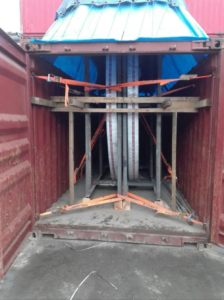
✅ Packing Photos
✅ Package Marking Photos
Frequently Asked Questions
What documents are required to import bearings?
Typically a Commercial Invoice, Packing List, transport document (Bill of Lading or Air Waybill), and, depending on the destination, a Certificate of Origin and product-specific supporting documents.
Do all bearing shipments need a Certificate of Origin?
No. Requirements vary by country and applicable trade agreements.
Who decides the final HS Code?
The supplier can suggest a code, but the importer or customs broker should confirm the final national tariff classification.
Should I request inspection reports?
Yes, especially for customized, precision or large industrial bearings.
Conclusion
From my experience as a bearing manufacturer, successful international shipments depend on more than producing high-quality bearings.
The right documents are just as important as the right products.
When we prepare a shipment, I don’t think only about production.
I think about the customs officer who will review the documents, the logistics company that will handle the cargo, and the buyer who wants the bearings delivered without delay.
A complete and accurate documentation package reduces customs risks, speeds up clearance, and gives buyers greater confidence throughout the procurement process.
If you’re importing bearings for the first time—or managing regular international purchases—I recommend using a standardized document checklist before every shipment. It is one of the simplest ways to avoid unnecessary costs and keep your supply chain running smoothly.
If you would like to know the import duty rates for bearings, please read my other article.
How Much Is the Import Tariff on Bearings from China? A Practical Guide for Global Buyers