In the past 25 years, our bearings have been used in more than 50 industries, including (textile machinery, steel production equipment, wind turbines, wind turbine equipment, reducers, fitness equipment, construction equipment, household appliances, mining machinery , drones, logistics equipment, medical equipment, paper machinery, robots, machine tools, power tools and other industries), time has proven that the quality of our products can stand the test, which is why customers in many industries choose us and Reasons to keep cooperation with us.
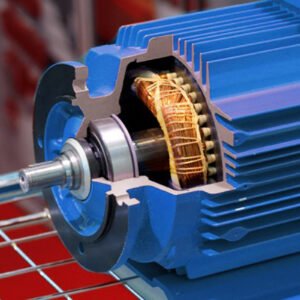
Mechanical equipment industry
Home appliance industry
Cooling fan
Power tool
Gear box
Forklift
Robot
Mechanical equipment industry
Universal motors are the power source of various mechanical equipment and are widely used in various mechanical equipment. Bearings are key components of general motors, and they affect the energy efficiency and life of mechanical equipment in various industries.
Sub-sectors
Pump industry
Machine tool equipment
Agricultural machinery
Construction machinery
Automobiles and other vehicles
Textile machinery
Papermaking equipment
Logistics equipment
Industrial production equipment
Related Products
Ball bearings
Cylindrical roller bearings
Other custom bearings
Product advantages
Low noise
Long life
High energy efficiency
High quality
High cost performance
Home appliance industry
Bearings are also widely used in the field of household appliances.
Sub-sectors
Air conditioners
Washing machines
Refrigerators
Hair dryers
Vacuum cleaners
Dryers
Scrubbers
Others
Related products
Deep groove ball bearings
Other customized bearings
vkuken bearings also have a good market share in these fields.
Product advantages
High precision
Ultra-quiet
Low torque
Long life
High speed
High cost performance
Cooling fan
Cooling fans are widely used in home appliances, computers, computer rooms and other fields. Bearings determine the speed and energy efficiency of cooling fans.
Sub-sectors
Computers
Computer rooms
Home appliances
Industrial fans
Power distribution rooms
Related products
Miniature deep groove ball bearings
Miniature bearings
Product advantages
Small and micro
High speed
Low noise
Long life
High precision
High energy efficiency
High cost performance
Power tool
Power tools are widely used in life, and they also have bearings inside. Due to the harsh working environment of power tools, the industry has very strict requirements for bearings.
Sub-sectors
Angle grinder
Charge drill
Sanding machine
Woodworking tools
Electric saw
Lawn mower
Electric hammer
Others
Related products
Miniature deep groove ball bearings
Miniature bearings
Product advantages
High speed
Good sealing
Long life
Miniature precision
High cost performance
Gear box
The gearbox is equipped with bearings and is widely used in many industries. Due to the working environment of the gearbox, which has factors such as high load and small space, these fields have very stringent technical requirements for bearings.
Sub-sectors
Automobile
Construction machinery
Production equipment
Logistics equipment
Related products
Deep groove ball bearings
Angular contact ball bearings
Needle roller bearings
Tapered roller bearings
Cylindrical roller bearings
Other customized bearings
Product advantages
High load
Long life
Thin wall
High precision
High cost performance
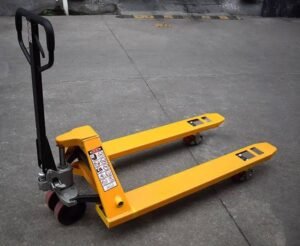
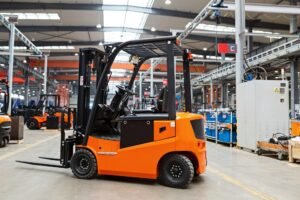
Forklift
Bearings play an essential role in forklifts by ensuring the smooth operation of critical components such as the wheels, mast, and drive system. They reduce friction between moving parts, enhancing the efficiency and performance of the forklift. Properly functioning bearings help maintain stability and control, which is vital for the safety of both the operator and the load.
Sub-Sectors
manual forklifts
powered forklifts
Related Products
Forklift main roller bearing
Forklift side roller bearing
Forklift sprocket bearing
Product Advantages
High efficiency
High durability
High safety
Low maintenance cost
Low noise
Better load handling
Long life
High cost performance
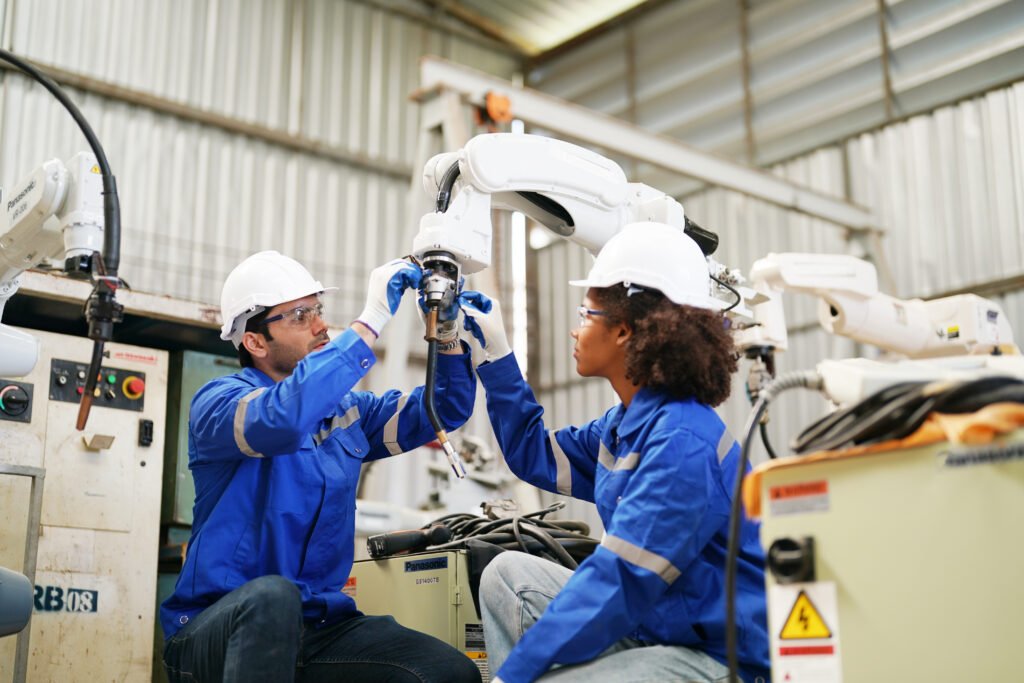
Robot
Application of bearings in the field of robotics
Sub-Sectors
RV reducer special bearings
Harmonic reducer special bearings
Related Products
Cross roller bearings for harmonic reducers
Angular contact bearings for travel reducers
Main bearings for RV reducers
Product Advantages
Lightweight design
Withstands heavy loads
Outputs high torque
High speed
High precision
Low noise
Long life
Motor bearings
Air conditioning bearings
Power tool bearings
Gearbox bearings
Forklift bearings
Robot arm bearings
Reducer bearings
Washing machine one-way bearing
When you send us an inquiry, you will receive more than just a quotation, We can also provide you with the following information
Professional Bidding Documents
Standard General Drawing
Cost-Effective Official Quotation
Professional Technical Clarification
Exclusive Authorization Letter
Corresponding Certificates
Responsive Business Service
Excellent After-Sales Service
VS.
General Suppliers
No Drawing
No Calculating Sheet
Slow Response
No Professional Support
No Experience of Third Party Inspection
Not Standard Parts
No Flexible Payment Method
Slow delivery
Industries where our bearings are widely used
In the past 25 years, our bearings have been used in more than 50 industries, including (textile machinery, steel production equipment, wind turbines, wind turbine equipment, reducers, fitness equipment, construction equipment, household appliances, mining machinery , drones, logistics equipment, medical equipment, paper machinery, robots, machine tools, power tools and other industries), time has proven that the quality of our products can stand the test, which is why customers in many industries choose us and Reasons to keep cooperation with us.
Textile machinery bearings
Wind power equipment bearings
Papermaking equipment bearings
Logistics equipment bearings
Construction Equipment Bearings
Electrical equipment bearings
Fitness equipment bearings
Power tool bearings
THE CHOICE OF LEADING BRANDS
Trusted by Our Clients
We take every customer we are cooperating with and those we have not yet cooperated with seriously, and we respond seriously to every customer inquiry. VKUKEN’s team understands that it is this spirit that makes many well-known companies at home and abroad trust and choose us.
We not only supply bearing products to these customers, our professional engineers also visit customers’ companies to help them solve problems encountered in bearing applications, participate in their product research and development projects, design and customize various bearings, and help them make breakthroughs. Technical barriers.
Send us a message and share with us the current situation in your industry and the situations you are facing. Let us find ways to help you solve the problems and surpass your competitors.
The service life of sealed bearings is influenced by several key factors, including operating temperature, load and pressure, speed, lubrication quality, contamination, and environmental conditions.
Proper lubrication is essential for maintaining motor bearings, as it reduces friction, prevents overheating, and protects against wear and corrosion. The key to effective lubrication
Double-row angular contact ball bearings are designed to handle both radial and axial loads simultaneously, offering high load capacity and stability. These bearings feature two
Ceramic ball bearings are made from advanced materials like silicon nitride, offering lower friction, greater durability, and higher resistance to corrosion compared to steel ball
When buying ball screw bearings, consider the type that best suits your application: standard, angular contact, backlash-free, miniature, or double nut bearings. Key selection factors
Thin-walled bearings have a lighter, more compact design, making them ideal for high-speed, precision applications with lower load demands, such as in aerospace, consumer electronics,
Sliding bearings are essential in humanoid robots, enabling smooth and precise movements in critical components like joints, arms, legs, necks, and hands. By reducing friction,
Choosing the right bearings for robotic arms involves considering key factors like load capacity, precision, speed, durability, and environmental conditions. It’s essential to select bearings
 Skip to content