Skip to content

Introduction
When a customer asks me for a bearing quotation, one of the most common shipping questions is:
“What is the HS code for this bearing?”
At first, this may sound like a simple question. A bearing has a model number, so it should also have one obvious customs code.
In practice, bearing classification is more complicated.
The HS code may depend on:
- Whether the product uses balls or rollers
- The shape of the rollers
- Whether it is radial, thrust, or combined
- Whether it is a complete bearing or only a component
- Whether it includes a housing
- Whether it is a rolling bearing or a plain bearing
- Whether additional features change its essential character
- The national tariff schedule used by the importing country
This is why I never recommend choosing an HS code from a random online list and using it without checking the actual product.
In this guide, I will explain how I approach bearing classification, what the most common HS codes mean, which products frequently cause confusion, and where buyers can verify the correct tariff code before importation.
1. What Is an HS Code?
The Harmonized System, commonly called the HS, is an international product-classification system used for customs declarations, trade statistics and tariff administration.
The system is maintained internationally under the Harmonized System framework. Countries normally share the same first six digits, but they can add further digits for national tariff, statistical or regulatory purposes. The European Union, for example, develops its Combined Nomenclature from the international HS and uses additional subdivisions for EU customs declarations. (Taxation and Customs Union)
A code can therefore have several levels:
| Level | Example | Meaning |
|---|---|---|
| Chapter | 84 | Machinery and mechanical equipment |
| Heading | 8482 | Ball or roller bearings and parts |
| HS subheading | 8482.10 | Ball bearings |
| National tariff code | More than six digits | Country-specific classification |
This distinction matters.
A supplier may provide a six-digit HS code, but the importer may still need an eight-digit, ten-digit or longer national code for customs clearance.
For example:
- The international classification may identify a product as 8482.10
- The United States may subdivide it further under the HTSUS
- The European Union may use an eight-digit CN code and a ten-digit TARIC code
- Canada, the United Kingdom, Australia and other countries may use their own additional digits
Therefore, I treat the six-digit HS code as the classification starting point, not always the final declaration code.
2. The Main HS Heading for Ball and Roller Bearings
Most conventional rolling bearings fall under:
HS Heading 8482
Ball or roller bearings, and parts thereof
The main six-digit subheadings commonly used for bearings are:
| HS code | General product category |
|---|---|
| 8482.10 | Ball bearings |
| 8482.20 | Tapered roller bearings, including cone and tapered roller assemblies |
| 8482.30 | Spherical roller bearings |
| 8482.40 | Needle roller bearings |
| 8482.50 | Other cylindrical roller bearings |
| 8482.80 | Other bearings, including combined ball-and-roller bearings |
| 8482.91 | Balls, needles and rollers |
| 8482.99 | Other bearing parts |
These international categories are reflected in official tariff schedules and government trade documents. (协和关税表)
However, these descriptions alone do not resolve every classification question. The actual design of the product must still be examined.
3. HS Code 8482.10 — Ball Bearings
What normally falls under 8482.10?
This subheading generally covers complete bearings in which balls are the principal rolling elements.
Typical examples include:
- Deep groove ball bearings
- Angular contact ball bearings
- Self-aligning ball bearings
- Thrust ball bearings
- Four-point contact ball bearings
- Miniature ball bearings
- Thin-section ball bearings
- Stainless-steel ball bearings
- Ceramic or hybrid ball bearings
- Insert bearings without a housing
- Certain ball-type slewing bearings
The U.S. tariff schedule, for example, places ball bearings under 8482.10 and then divides them into more detailed national classifications based on characteristics such as construction and dimensions. (协和关税表)
Product examples
Deep groove ball bearings
Common models include:
- 6204
- 6205-2RS
- 6308-ZZ
- 6001
- 618 series
- 619 series
These remain ball bearings whether they are:
- Open
- Shielded
- Sealed
- Grease-filled
- Stainless steel
- High-temperature
- Low-noise
- Electrically insulated
Features such as seals, shields, grease or internal clearance normally affect the product specification, but they do not automatically change a ball bearing into another HS category.
Angular contact ball bearings
Examples include:
- 7208
- 7312
- 7005C
- Double-row angular contact bearings
- Matched bearing pairs
Because balls remain the rolling elements, these products normally begin under the ball-bearing category.
Self-aligning ball bearings
Examples include:
- 1208
- 2209
- 1310
They have a spherical outer-ring raceway, but the rolling elements are balls. They should not be confused with spherical roller bearings under 8482.30.
Thrust ball bearings
Examples include:
- 51110
- 51220
- 51316
- Double-direction thrust ball bearings
The bearing supports axial load, but it is still classified according to its ball rolling elements.
Important lesson
The words radial, axial, thrust, angular contact, self-aligning and thin section describe function or geometry.
For first-stage HS classification, I first ask:
Are the primary rolling elements balls?
When the answer is yes, 8482.10 is usually the first category to examine.
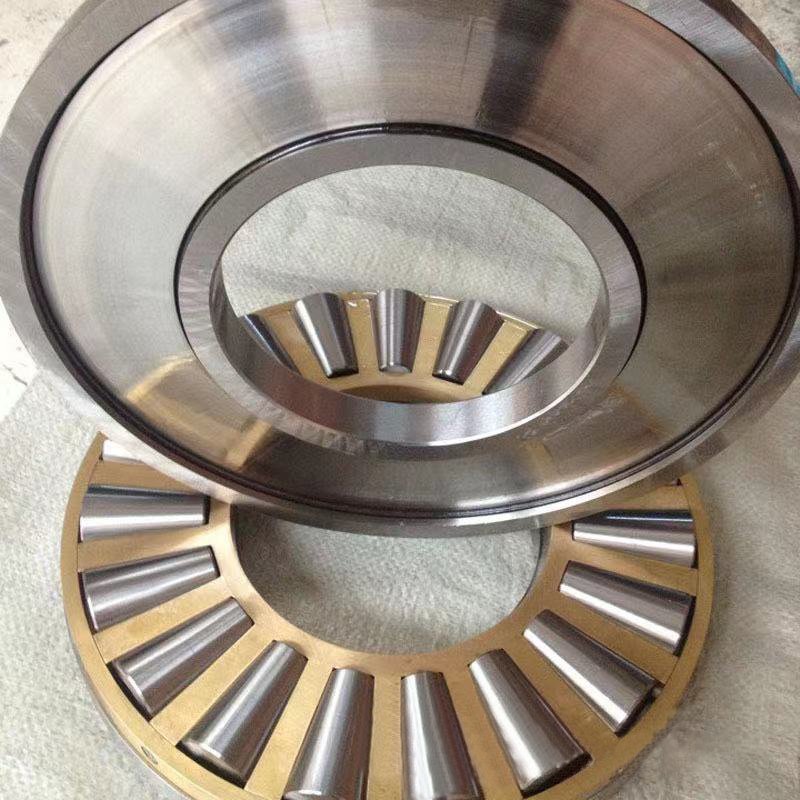
4. HS Code 8482.20 — Tapered Roller Bearings
This category covers:
Tapered roller bearings, including cone and tapered roller assemblies
Typical products include:
- Single-row tapered roller bearings
- Double-row tapered roller bearings
- Four-row tapered roller bearings
- Inch-series tapered roller bearings
- Metric tapered roller bearings
- Separate cone assemblies
- Cone-and-cup bearing sets
Examples may include:
- 30210
- 32216
- 32320
- 32024
- LM series
- L series
- Large four-row rolling-mill bearings
Why tapered roller bearings have a separate code
Tapered rollers are designed so that their rolling surfaces and raceways converge geometrically toward a common point on the bearing axis.
This construction allows tapered roller bearings to support:
- Radial load
- Axial load
- Combined load
Because the roller geometry is distinctive, tapered roller bearings have their own subheading rather than being grouped with general cylindrical roller bearings.
Cone assemblies
A tapered roller bearing may be supplied as:
- A complete bearing
- A cone assembly
- A separate cup
- A matched set
This is one area where documentation must be precise.
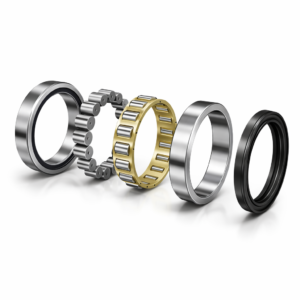
A cone assembly generally contains:
- Inner ring
- Rollers
- Cage
A cup is normally the outer ring.
The commercial invoice should clearly identify which component is being shipped. Importers should not assume that every separate tapered-bearing component uses exactly the same national tariff code as a complete assembled bearing.
5. HS Code 8482.30 — Spherical Roller Bearings
This subheading generally covers complete bearings with:
- Barrel-shaped or spherical rollers
- A spherical outer-ring raceway
- Self-aligning capability
Typical examples include:
- 222 series
- 223 series
- 230 series
- 231 series
- 232 series
- 239 series
- 240 series
- 241 series
- Spherical roller thrust bearings, subject to the precise national classification
Common suffixes may include:
- CA
- CC
- E
- MB
- W33
- K
- C3
Examples:
- 22220CA/W33
- 22328CC/C3W33
- 23140K
- 24044E
Common classification mistake
A spherical roller bearing is not the same as a self-aligning ball bearing.
Compare:
- Self-aligning ball bearing: balls → normally 8482.10
- Spherical roller bearing: rollers → normally 8482.30
The word self-aligning alone does not determine the code. The rolling-element type does.
Why the distinction matters
Spherical roller bearings are frequently used in:
- Mining equipment
- Crushers
- Vibrating screens
- Paper machinery
- Gearboxes
- Heavy conveyors
- Wind-energy equipment
- Steel mills
Their size, load capacity and application do not define the HS code. The internal roller design is the stronger classification characteristic.
6. HS Code 8482.40 — Needle Roller Bearings
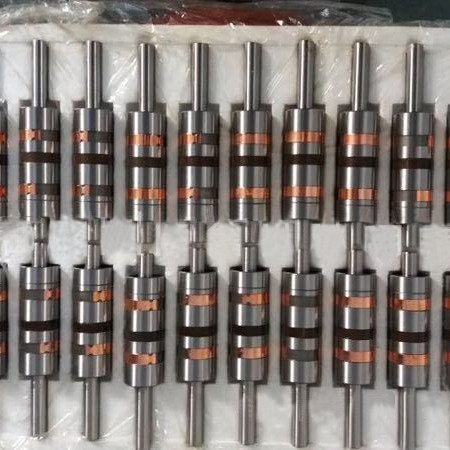
Needle roller bearings use long, thin cylindrical rolling elements.
Official tariff notes may define this category using the relationship between roller diameter and length. The U.S. Chapter 84 tariff material, for example, notes that subheading 8482.40 applies to bearings with cylindrical rollers of uniform diameter not exceeding a specified size and with length meeting a minimum ratio to diameter. (协和关税表)
Typical products include:
- Drawn-cup needle roller bearings
- Machined-ring needle bearings
- Needle roller and cage assemblies
- Needle roller thrust bearings
- Combined needle roller bearings
- Full-complement needle bearings
Examples include:
- HK series
- BK series
- NK series
- NKI series
- NA series
- K series needle cage assemblies
- AXK thrust needle assemblies
Why needle bearings require special attention
A needle bearing may be supplied:
- With inner ring
- Without inner ring
- With outer ring
- As only a roller-and-cage assembly
- As a combined needle-and-thrust bearing
- Integrated into a machined housing
These configurations can affect the detailed national code.
For customs documentation, I recommend stating more than simply:
“Needle bearing”
A better product description is:
“Needle roller bearing with machined outer ring and removable inner ring”
or:
“Needle roller and cage assembly, without inner and outer rings”
The more accurately the commercial documents describe the construction, the easier it is for the broker or customs authority to confirm the code.
7. HS Code 8482.50 — Other Cylindrical Roller Bearings
This category generally covers cylindrical roller bearings other than needle roller bearings.
Typical products include:
- Single-row cylindrical roller bearings
- Double-row cylindrical roller bearings
- Four-row cylindrical roller bearings
- Full-complement cylindrical roller bearings
- Cylindrical roller thrust bearings
- Split cylindrical roller bearings
- High-capacity cylindrical roller bearings
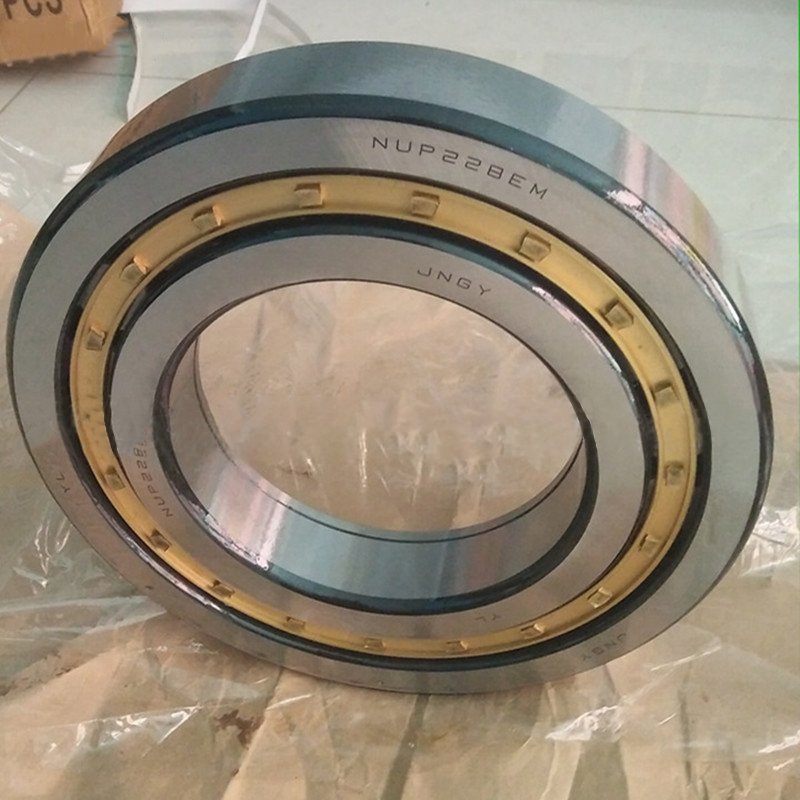
Common series include:
- NU
- NJ
- NUP
- N
- NF
- NN
- NNU
- SL
- Four-row rolling-mill series
Examples:
- NU 220
- NJ 2312
- NUP 2218
- NN 3020
- NNU 4924
- Four-row cylindrical roller bearing
Needle rollers versus cylindrical rollers
This is a frequent source of error.
Both products use cylindrical rolling elements, but needle rollers are significantly longer relative to their diameter.
I do not classify a bearing as 8482.40 merely because the rollers look narrow in a photograph. I review:
- Roller diameter
- Roller length
- Bearing structure
- Manufacturer drawing
- Cross-sectional design
- Applicable customs notes
A standard NU, NJ, NUP or NN bearing usually belongs in the “other cylindrical roller bearing” category rather than the needle-bearing category.
8. HS Code 8482.80 — Other Bearings and Combined Ball/Roller Bearings
This is the residual bearing category under heading 8482.
It may apply when a bearing does not fit the preceding specific categories.
Potential examples include:
- Combined ball-and-roller bearings
- Certain cross-roller bearings
- Certain unusual rolling-bearing designs
- Special compound bearing assemblies
- Bearings combining different rolling elements
However, I use this category cautiously.
A product should not be classified under “other” simply because:
- It is custom-made
- It has an unusual model number
- It is very large
- It is used in a specialized machine
- The supplier does not recognize the design
The specific categories should be reviewed first.
Crossed roller bearings
Crossed roller bearings use cylindrical rollers arranged alternately at right angles.
Depending on the precise construction and applicable national tariff rules, a crossed roller bearing may require analysis under:
- Other cylindrical roller bearings
- Other rolling bearings
- A more detailed country-specific subheading
For these products, I recommend supplying the customs broker with:
- Cross-sectional drawing
- Roller geometry
- Race structure
- Number of rows
- Whether it has inner or outer gearing
- Whether it is supplied as a complete bearing
- Functional description
A generic statement such as “cross bearing” is not sufficiently precise.
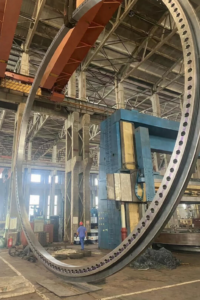
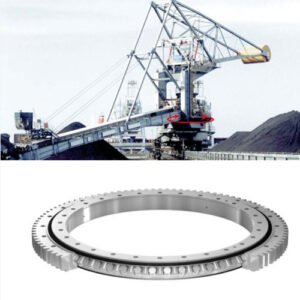
9. HS Codes for Slewing Bearings
Slewing bearings are one of the most misunderstood products in customs classification.
A slewing bearing may also be called:
- Slewing ring
- Slewing ring bearing
- Turntable bearing
- Slew bearing
- Rotary bearing
- Large-diameter bearing
Common constructions include:
- Single-row four-point contact ball
- Double-row ball
- Crossed cylindrical roller
- Three-row cylindrical roller
- Ball-and-roller combination
- Gearless design
- Internal gear
- External gear
Is there one universal HS code for slewing bearings?
No.
The classification should be based primarily on the bearing’s actual rolling-element design and complete construction.
A ball-type slewing ring may be considered within the ball-bearing category, while a roller-type design may require another subheading.
U.S. Customs rulings have treated certain gearless slewing rings or turntable bearings as products of heading 8482. These rulings demonstrate that customs authorities examine the complete construction and essential function rather than relying only on the commercial term “slewing ring.” (CROSS)
Does an integral gear change the classification?
Not necessarily.
Many slewing bearings include:
- External gear teeth
- Internal gear teeth
- No gear
The presence of gear teeth does not automatically mean the product should be declared as a separate gear under heading 8483.
Customs may examine which function gives the product its essential identity:
- Supporting load and rotation as a bearing
- Transmitting motion as gearing
- Operating as part of a larger mechanical assembly
This is precisely why large or customized slewing bearings deserve careful classification analysis.
My recommended description for customs documents
Instead of writing only:
Slewing bearing
I recommend a fuller description such as:
Single-row four-point contact ball slewing bearing with external gear, complete with inner ring, outer ring, rolling elements, cage and seals
For a roller design:
Three-row cylindrical roller slewing bearing with internal gear, complete assembly for heavy-duty rotary equipment
This description gives the broker the technical characteristics needed to assess classification.
10. HS Codes for Bearing Parts
Not every bearing shipment contains a complete bearing.
Heading 8482 also includes classifications for bearing parts.
HS 8482.91 — Balls, Needles and Rollers
This category generally covers rolling elements such as:
- Steel balls
- Ceramic balls
- Bearing rollers
- Needle rollers
- Cylindrical rollers
- Spherical rollers
- Tapered rollers
However, classification may depend on whether the products are identifiable as finished bearing rolling elements and on any relevant tariff notes.
HS 8482.99 — Other Bearing Parts
This category may include certain:
- Inner rings
- Outer rings
- Bearing races
- Cups
- Separate rings
- Other identifiable bearing components
But not every machined ring automatically qualifies as a finished bearing part.
Customs may examine whether the item is:
- A finished bearing race
- A semi-finished forging
- A rough-machined ring
- A general steel ring
- A gear ring
- A component dedicated to a specific machine
The production stage matters.
For example, a rough forging intended eventually to become a bearing ring may not always be classified identically to a completely ground and finished bearing race.
Cages, seals and accessories
Separate cages, seals, shields, sleeves, locknuts and adapters require individual analysis.
Examples include:
- Bearing cage
- Rubber seal
- Metal shield
- Adapter sleeve
- Withdrawal sleeve
- Locknut
- Lock washer
- Spacer ring
Some of these may fall under bearing-parts provisions, while others may be classified according to their own material or function.
I do not recommend using 8482.99 automatically for every item associated with a bearing.
11. Housed Bearings Are Usually Not Classified Under 8482
A common mistake is to classify every product containing a ball bearing under heading 8482.
Complete housed bearing units are generally covered under heading 8483.
HS 8483.20 — Housed Bearings Incorporating Ball or Roller Bearings
Typical examples include:
- Pillow block units
- Flange bearing units
- Take-up units
- Cartridge units
- Hanger units
- Mounted bearing units
Common series include:
- UCP
- UCF
- UCFL
- UCT
- UCFC
- UCPA
- SN housings supplied with bearings, depending on complete configuration
The U.S. tariff schedule expressly lists housed bearings incorporating ball or roller bearings under 8483.20 and provides more detailed subdivisions for flange, take-up, cartridge and hanger units. (协和关税表)
Insert bearing alone versus housed unit
This distinction is important:
- UC insert bearing supplied alone: may be treated as a ball bearing
- UCP unit containing insert bearing plus pillow-block housing: normally examined as a housed bearing
The same insert bearing can therefore appear under a different classification when sold as part of a complete housed unit.
12. Plain Bearings Are Not Ball or Roller Bearings
HS 8483.30 — Bearing Housings Without Incorporated Bearings and Plain Shaft Bearings
Plain bearings operate through sliding contact rather than rolling elements.
Examples include:
- Bushings
- Sleeve bearings
- Journal bearings
- Sintered bronze bushes
- Composite plain bearings
- Metal-polymer bearings
- Spherical plain bearings
- Certain thrust washers
- Plain shaft bearing shells
Official tariff schedules place plain shaft bearings under heading 8483 rather than heading 8482. (协和关税表)
Rolling bearing versus plain bearing
The distinction is fundamental:
| Rolling bearing | Plain bearing |
|---|---|
| Uses balls or rollers | Uses sliding contact |
| Usually heading 8482 | Usually heading 8483 |
| Raceways and rolling elements | Sliding surface, liner or bushing |
| Examples: 6205, 22220, NU220 | Examples: bronze bush, PTFE-lined plain bearing |
Spherical plain bearings
The word “spherical” can cause confusion.
Compare:
- Spherical roller bearing: contains rollers
- Spherical plain bearing: contains sliding spherical surfaces
They are not the same product and should not be assigned the same code merely because both use the word “spherical.”
13. Bearing Housings Without Bearings
A bearing housing supplied empty is different from a housed bearing unit.
Examples include:
- Plummer block housing
- Split pillow block housing
- Cast iron housing
- Steel bearing housing
- Flange housing without bearing
- Custom machined housing
When no ball or roller bearing is incorporated, the product may be considered under the bearing-housing provisions of heading 8483 rather than under 8482.
Customs documentation should state clearly:
Bearing housing without incorporated bearing
This avoids the impression that a complete mounted bearing unit is being shipped.
14. Linear Bearings and Linear Motion Products
Linear-motion products can be difficult because the commercial term “linear bearing” covers several different mechanisms.
Products may include:
- Linear ball bushings
- Linear ball-bearing blocks
- Linear guide carriages
- Profile rail guides
- Ball splines
- Roller guide blocks
- Linear shafts
- Complete linear modules
- Ball screws
A linear ball bushing contains recirculating balls, but a complete linear guide assembly may include:
- Rail
- Carriage
- Ball-return system
- End caps
- Seals
- Lubrication components
The final code may depend on whether the shipment is:
- A separate rolling bearing
- A linear guide carriage
- A complete guide system
- A ball screw
- A machine component
I do not recommend assigning 8482 to every product sold under the marketing label “linear bearing.”
The technical drawing and exact shipment configuration are essential.
15. Ceramic Bearings and Hybrid Bearings
Material alone usually does not determine the first six-digit bearing classification.
Examples include:
- Full ceramic ball bearings
- Zirconia bearings
- Silicon nitride bearings
- Hybrid bearings with ceramic balls and steel rings
- Stainless-steel bearings
- Plastic bearings
- High-temperature tool-steel bearings
I first identify:
- Is it a complete bearing?
- Does it use balls, rollers or sliding surfaces?
- Is it housed?
- Is it part of a larger assembly?
A hybrid deep groove ball bearing with ceramic balls still functions as a ball bearing.
A full ceramic ball bearing also remains structurally a ball bearing, although national tariff schedules, material notes or customs interpretations should still be checked.
16. Bearing Accessories May Have Different HS Codes
Products commonly sold with bearings include:
- Adapter sleeves
- Withdrawal sleeves
- Locknuts
- Lock washers
- Snap rings
- Lubrication rings
- Seals
- O-rings
- Grease
- Sensors
- Heating devices
- Mounting tools
These products should not automatically inherit the bearing’s HS code.
For example:
- Grease is classified as a lubricant, not as a bearing
- A rubber seal may be classified according to rubber-product provisions
- A sensor-bearing assembly may require analysis as an electrical or mechanical product
- A mounting tool is not a bearing part merely because it is used to install bearings
Each separately invoiced product should have its own defensible classification.
17. Can the Bearing Model Number Determine the HS Code?
The model number is useful, but it is not legally decisive.
For example:
- 6205-2RS strongly indicates a deep groove ball bearing
- 22220CA/W33 strongly indicates a spherical roller bearing
- NU 220 strongly indicates a cylindrical roller bearing
- 30210 strongly indicates a tapered roller bearing
- HK 2020 strongly indicates a needle roller bearing
However, customs classification is based on the objective characteristics of the imported goods, not only on the manufacturer’s model system.
A customs broker may need:
- Product catalogue
- Technical drawing
- Cross-section
- Material description
- Photographs
- Rolling-element dimensions
- Housing information
- Intended function
- Degree of manufacture
Therefore, I use the model number as evidence, not as the sole basis for classification.
18. A Practical Bearing HS Code Reference Table
The following table is a general six-digit reference, not a binding customs determination.
| Bearing product | Likely HS category to examine |
|---|---|
| Deep groove ball bearing | 8482.10 |
| Angular contact ball bearing | 8482.10 |
| Self-aligning ball bearing | 8482.10 |
| Thrust ball bearing | 8482.10 |
| Thin-section ball bearing | 8482.10 |
| Four-point contact ball bearing | 8482.10 |
| Ball-type slewing bearing | Often 8482.10, subject to design and national rules |
| Tapered roller bearing | 8482.20 |
| Tapered cone assembly | 8482.20 or applicable national parts subdivision |
| Spherical roller bearing | 8482.30 |
| Needle roller bearing | 8482.40 |
| Needle cage assembly | 8482.40 or applicable parts classification |
| Cylindrical roller bearing | 8482.50 |
| Crossed roller bearing | 8482.50 or 8482.80 depending on classification |
| Combined ball-and-roller bearing | 8482.80 |
| Bearing balls, needles or rollers | 8482.91 |
| Finished bearing rings and other parts | 8482.99 |
| Pillow block bearing unit | 8483.20 |
| Flange bearing unit | 8483.20 |
| Take-up bearing unit | 8483.20 |
| Empty bearing housing | 8483.30 |
| Plain shaft bearing or bushing | 8483.30 |
| Spherical plain bearing | 8483.30 or applicable national subdivision |
| Linear guide or carriage | Requires product-specific analysis |
| Ball screw | Normally examined under heading 8483, not 8482 |
| Gear ring without bearing function | Requires analysis under gearing or other provisions |
19. How I Determine a Suggested HS Code
When a buyer asks VKUKEN for an HS-code reference, I follow a structured process.
Step 1: Identify the actual product being shipped
I confirm whether it is:
- Complete bearing
- Bearing ring
- Roller set
- Cage
- Housing
- Mounted unit
- Plain bearing
- Gear ring
- Combined assembly
Step 2: Identify the rolling element
I determine whether it uses:
- Balls
- Tapered rollers
- Spherical rollers
- Needle rollers
- Cylindrical rollers
- Mixed rolling elements
- No rolling elements
Step 3: Review the structural configuration
I examine:
- Number of rows
- Radial or thrust arrangement
- Integral housing
- Integral shaft
- Gear teeth
- Separable rings
- Seals and shields
- Degree of completion
Step 4: Review the technical documentation
Useful evidence includes:
- Drawing
- Product photograph
- Catalogue page
- Cross-section
- Material specification
- Application description
- Assembly list
Step 5: Check the destination country’s tariff schedule
The six-digit HS code is not always enough.
The national tariff database must be checked for:
- Full tariff code
- Normal duty rate
- Preferential duty
- Additional tariffs
- Anti-dumping duties
- Customs restrictions
- Statistical units
Step 6: Ask the importer or broker to confirm
The supplier can suggest a code, but the importer is usually responsible for the customs declaration in the destination market.
For high-value, unusual or recurring shipments, I recommend obtaining a formal classification ruling.
20. Where Buyers Can Check Bearing HS Codes
United States
Buyers can search the official Harmonized Tariff Schedule of the United States, administered by the U.S. International Trade Commission.
Search terms may include:
- 8482
- Ball bearings
- Spherical roller bearings
- Needle roller bearings
- Housed bearings
The U.S. schedule contains detailed national subheadings beyond the six-digit HS level. (协和关税表)
For difficult products, buyers can also review published U.S. Customs classification rulings.
European Union
EU importers should consult:
- Combined Nomenclature
- TARIC
- European Binding Tariff Information database
TARIC integrates customs-duty measures and commercial-policy requirements and is updated through the EU customs system. (Taxation and Customs Union)
An EU Binding Tariff Information decision is a legal classification decision. It is generally valid for three years across the EU and binds the customs administrations and the holder, subject to applicable conditions. (Taxation and Customs Union)
United Kingdom
UK importers should search the official UK Trade Tariff using the product description or likely commodity code.
Canada
Canadian importers should consult the Canada Customs Tariff and, where necessary, ask the Canada Border Services Agency or a licensed customs broker for assistance.
Other countries
Most customs administrations provide an online tariff search tool.
I recommend searching for:
Official customs tariff + destination country
and then confirming that the website belongs to the national customs authority.
21. Why HS-Code Accuracy Matters
An HS code affects much more than the ordinary customs-duty rate.
It may determine:
- Import tariff
- VAT or GST treatment
- Anti-dumping duty
- Countervailing duty
- Additional country-specific tariffs
- Trade restrictions
- Import permits
- Statistical reporting
- Origin requirements
- Customs inspection risk
EU customs guidance, for example, explains that tariff classification determines customs duties and may also affect additional measures such as anti-dumping duties. (Taxation and Customs Union)
An incorrect code can lead to:
- Delayed clearance
- Reassessment of duty
- Additional taxes
- Penalties
- Document corrections
- Storage charges
- Disputes with customs
- Problems during post-entry audits
This is why I do not view the HS code as a minor shipping detail.
It is part of the commercial and compliance planning for the order.
22. Common Bearing Classification Mistakes
Mistake 1: Using 8482 for every product called a bearing
Plain bearings and housed bearing units may fall under 8483.
Mistake 2: Classifying by application
A bearing used in a crane is not necessarily classified as a crane part.
A bearing used in a gearbox is not automatically a gearbox part.
A bearing that is separately presented and identifiable as a bearing may remain classified according to its own heading, subject to the applicable tariff rules.
Mistake 3: Confusing self-aligning ball bearings with spherical roller bearings
The rolling element determines the basic distinction.
Mistake 4: Treating all cylindrical rollers as needle rollers
Needle rollers have specific geometric characteristics.
Mistake 5: Using the supplier’s export code as the importer’s final code
The supplier’s domestic export classification and the destination country’s import tariff code may not contain the same number of digits.
Mistake 6: Using one code for a mixed shipment
A shipment containing:
- Bearings
- Housings
- Grease
- Seals
- Tools
may require multiple HS codes.
Mistake 7: Ignoring the production stage
A rough forging, semi-finished ring and completed bearing race may not be classified identically.
Mistake 8: Assuming a previous code is permanently correct
Tariff schedules and national subdivisions can change. Product designs can also change.
The code should be reviewed when:
- The product changes
- The destination changes
- The tariff schedule is updated
- A trade remedy is introduced
- Customs issues a new ruling
23. What Information Should a Supplier Provide?
When we help customers prepare import documents, I believe the supplier should provide enough technical information for a defensible classification.
Useful information includes:
- Exact bearing designation
- Product name
- Bearing type
- Rolling-element type
- Number of rows
- Radial, thrust or combined design
- Material
- Outside diameter
- Bore diameter
- Width or height
- Housing status
- Gear status
- Complete or partial assembly
- Country of origin
- Net and gross weight
- Product drawing
- Catalogue reference
- Suggested six-digit HS code
However, I always distinguish between:
Supplier’s suggested HS code
and:
Final customs classification
The final declaration should be confirmed by the importer, customs broker or competent customs authority.
24. When Should a Buyer Request a Binding Ruling?
I recommend considering a formal or binding classification decision when:
- The bearing is very expensive
- The product is imported regularly
- The design is unusual
- The bearing includes gearing or other functions
- The product is a large slewing ring
- The shipment contains a partly finished component
- Two possible headings produce significantly different duties
- Anti-dumping measures may apply
- Customs has previously questioned the code
- Multiple countries classify similar products differently
In the EU, a BTI decision provides legal certainty regarding classification and is generally valid throughout the EU for three years. (Taxation and Customs Union)
In other markets, importers should check whether the customs authority offers:
- Advance ruling
- Binding tariff ruling
- Classification opinion
- Pre-entry consultation
For a recurring product, the cost and effort of obtaining certainty can be much lower than the risk of repeated incorrect entries.
25. Frequently Asked Questions
What is the general HS code for bearings?
Most ball and roller bearings begin under heading 8482.
However, the complete code depends on the bearing type and the importing country’s national tariff schedule.
What is the HS code for ball bearings?
The six-digit international subheading is generally 8482.10.
What is the HS code for tapered roller bearings?
The general six-digit subheading is 8482.20.
What is the HS code for spherical roller bearings?
The general six-digit subheading is 8482.30.
What is the HS code for needle roller bearings?
The general six-digit subheading is 8482.40.
What is the HS code for cylindrical roller bearings?
Other cylindrical roller bearings are generally classified under 8482.50.
What is the HS code for bearing parts?
Balls, needles and rollers generally fall under 8482.91, while other identifiable bearing parts may fall under 8482.99.
What is the HS code for pillow block bearings?
A complete housed bearing unit is generally examined under 8483.20.
What is the HS code for plain bearings?
Plain shaft bearings are generally examined under 8483.30.
What is the HS code for slewing bearings?
There is no single universal answer for every slewing bearing. Classification depends on whether the design uses balls, cylindrical rollers, crossed rollers or combined rolling elements, as well as the complete product construction.
Can VKUKEN provide an HS code?
Yes. We can provide a suggested HS-code reference based on the product design and shipment configuration.
However, the importer should confirm the final national tariff code with the destination customs authority or customs broker.
Conclusion
When buyers ask me for the HS code of a bearing, I do not begin with the application or the model number alone.
I begin with the product’s physical construction:
- What are the rolling elements?
- Is it a complete bearing?
- Is it housed?
- Is it a plain bearing?
- Is it a separate part?
- Does it include gearing or another major function?
- What exactly will be presented to customs?
For most conventional rolling bearings, heading 8482 is the correct starting point:
- 8482.10: ball bearings
- 8482.20: tapered roller bearings
- 8482.30: spherical roller bearings
- 8482.40: needle roller bearings
- 8482.50: other cylindrical roller bearings
- 8482.80: other or combined bearings
- 8482.91: balls, needles and rollers
- 8482.99: other bearing parts
However, housed bearing units and plain bearings often move into heading 8483, and specialized products such as slewing bearings, linear guides and integrated assemblies require closer analysis.
At VKUKEN, we can help buyers identify the bearing construction, prepare accurate product descriptions, provide technical drawings and suggest a suitable six-digit HS-code reference. For final customs clearance, I recommend confirming the full national tariff code through the official customs database, a licensed customs broker or a binding classification ruling.
Correct classification before shipment can prevent delays, unexpected duties and avoidable compliance problems after the goods arrive.
Want to know the import duty rates for bearings? Please read my other article.
How Much Is the Import Tariff on Bearings from China? A Practical Guide for Global Buyers